



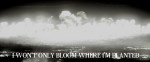
“My sister and I grew up in a poor mining system. The First Order stripped our ore to finance their military, then shelled us to test their weapons. They took everything we had. And who do you think these people are? There’s only one business in the galaxy that will get you this rich.”
“The people of one village, Sebris Gamma, refused to go along with the new orders. The Gammans told the First Order that they’d been an independent mining collective since the Republic days and meant to stay that way. We cheered them on – until the First Order bombers came to Sebris Gamma. They dropped ground-penetrating bombs loaded with incendiaries that burned the Gammans alive.
A week after Sebris Gamma, our parents put us on a supply ship to Botajef.”
Napalm – Quan Barry // Star Wars: The Last Jedi (2017) // The Last Jedi: Bomber Command – Jason Fry
I don’t know if I’ve said this before about SW and its supposed Vietnam War parallel (Endor) and this far stronger one, but… Ewoks seen as the Viet Cong is obviously super racist since they’re a basket full of colonialist “jungle people” tropes (eating human/white flesh, naively worshipping technology as a god) but also the idea of their guerilla warfare completely loses the real-world factor of desperation. The Ewoks are not shown or mentioned to have been heavily victimized. No big atrocities. In fact they always seem to have the upper hand. Their rams and log traps are treated as winning the military rock-paper-scissors of forest combat.
But that’s not really why guerilla fighters win, it’s not sheer tactical advantage, it’s not just “knowing your home turf”. It’s because if your home is being invaded and your family being slaughtered, you have every reason to put your entire heart and mind into the fight, because winning is the only chance you have of a future. But the soldiers of the colonial invading army have the luxury of a family and a safe war-free home to return to that they’ll lose if they die.
The story of the Tico sisters finally gets that right. They’re ordinary, capable but not with any unbelievable skills. But they’re fighting with nothing behind them and mixed measures of death and hope ahead of them. That’s what makes them daring and strong. Which is why Rose has an arc where, after losing Paige, she has to renew her belief in what she’s really fighting *for*.
One of the things that has frustrated me is this insistence that Rose is a preachy character or that her speech in Canto Bight was too neatly clean and moralistic in a way that preaches at the viewers, which somehow makes her a badly written character. I’ve written how this notion of bad writing has been shaped by a very specific geopolitical moment in the cold war where removing politics from literature as much as possible was desirable, over having polemic or political moments that weren’t easy to obfuscate under the veneer of personal and apolitical stories about personal tragedies. Viet Thanh Nguyen, a vietnamese american writer also has a really good essay on the MFA/writing workshop and how it confines the kind of writing a third worlder or a non white person may do before they’re considered “bad writers”. A pertinent quote:
As an institution, the workshop reproduces its ideology, which pretends that “Show, don’t tell” is universal when it is, in fact, the expression of a particular population, the white majority, typically at least middle-class and often, but not exclusively, male. The identity behind the workshop’s origins is invisible. Like all privileges, this identity is unmarked until it is thrown into relief against that which is marked, visible and outspoken, which is to say me and others like me.
We, the barbarians at the gate, the descendants of Caliban, the ones who have no choice but to speak in the language we have — we come bearing the experiences and ideas the workshop suppresses. We come from the Communist countries America bombed during the Cold War, or where it sponsored counter-Communist efforts. We come from the lands America occupied, invaded or colonized. We come as refugees and immigrants, documented and undocumented. We come from the ghettos, barrios, reservations and borders of America where there are no workshops. We come from the bedrooms and the kitchens of the American home, where we were supposed to stay, and stay silent. We come speaking languages other than English. We come from the margins, where English is broken. We come with financial aid and loans and families that do not understand what “creative writing” is. We come from communities we do not wish to renounce in the name of our individualism. We come wanting to do more than just sell our stories to white audiences. And we come with the desire not just to show, but to tell.
What I love about the scene with Rose on Canto Bight is that it smashes through the show/tell binary and tells us something entirely meta and yet also personal. For one, there are some tragedies and violences that are too personal, vast and devastating to be narrated in any way but in the bald hard form of telling. You don’t show it, you don’t eschew the straightforward fact and opt for instead, a zig-zagging personalized narrative that zeroes in on a tiny sliver of life in relation to this devastation. Sometimes you want people to grasp the scope of the devastation, the violence and the injury committed and for that, telling is more striking. We see the First Order blow up five planets on screen, but people refuse to believe the First Order is unequivocally evil or else buy into the seductive propaganda of their only interested being order, that this act of violence is an aberration, yes, but an understandable one.
Rose puts a fist through this. She tells us the story of her planet’s devastation and paints the violence for us: the seizure of wealth, the theft, the violent colonialism, the shelling of their planet to test the weapons. The violence is stark and cannot be concealed or veiled. The structures that enable this violence are similarly brutally exposed because sometimes you cannot show how wealth enables violence: you have to narrate it, to smash past the viewer’s hegemonic structured worldview which yes, associates wealth with seductive appeal and detaches it from the violence it necessitates for it’s existence.
So. She tells us. And then the camera, the sound and the director shows us. If you rewatch the scene, there is a place where her voice wavers and then becomes harsher when she says “and who do you think these people are” – this is the showing aspect of the telling, because what it shows us is that this tragedy which she narrates so baldly is one that has caused her immense grief and pain: a grief and pain she carries bottled up inside her and continues to bottle up because to let go will be to open a floodgate that cannot be stopped. It shows us her rage. It shows us her unhappiness. It shows us how much depth lies beneath the starry eyed girl, the warm and enthusiastic young woman, beneath the mourning sister. It smashes the show/tell binary because it shows you that sometimes the only way to narrate something that runs so deep and wounds so deep is by telling it, stripped of as much emotion as you can.
It’s a meta-reflection (though I think unintentionally so) on how for some peoples, there can be no way of narrating the social and political wounds except in bald narratives that violently strip away the curtains and veils that obscure the machinery that caused them violence. It isn’t preachy: it’s the only way the story can be told without uncontrollable emotion seeping through. The same uncontrollable emotion that will get one labelled hysterical or irrational, or get one disregarded as another emotional crank. Or worse, for preaching but not with the appropriate level of detachment required for public discourse to reassure the public that you are an objective speaker, that you do not have an agenda.
Incidentally, all of these are things that Rose, as a character, has been accused of. Incidentally, this is what all writers of third world countries, who touch on politics in any form, are accused of. Incidentally, this is a form of imperialism that Viet Thanh Nguyen discusses in that essay and in two separate interviews that I recommend reading/listening to because both deal with the intersection of media and memory and how memory can be imperialized and colonized and what it means to move the American from subject to object (and whether the American has ever been the object of the third world gaze in these purportedly anti-war stories: a question relevant to Star Wars which has appropriated this narrative and made it wholely white or else, stripped the in-universe character stand-ins of voice, interiority and humanity).
In short, this notion that Rose is too preachy and too political a character – a notion repeated across the board by alt righters, conservatives and liberals (is it a coincidence that socialists, communists and confirmed leftists all have a fondness for her character? For her rage?) – is one that bears deep scrutiny on our part, especially when we reframe it as bad writing: those statements are not apolitical and it does well to consider the imperialist history lurking behind those sentiments and what it means when we say it’s preachy, when a non white woman from a planet that has experiences similar to that of the third world turns her gaze on wealth that is dressed in the garb of the first, on a military that speaks the language of the first in it’s accents and wears it’s uniforms, to tell the story of the violence enacted on her and her people.

 Tumblr Exodus