Yes its still open. At the moment i’m still trying to rebuild my portfolio on Twitter and trying to cope with Tumblr fuckening (and it doesn’t help one bit that my commission post is flagged too and might be deleted after 17th) so it might take me some time to get to it.
ask around to see if your particular fandom has a similar organizer
talk to fandom friends, especially other writers. They might help or they could point you in the right direction
know what you’re looking for and put out a post seeking it.
Examples of that last point would be something like,
“I’m looking for a Spanish speaker, preferably from Argentina, to help me add some Spanish into my fic and give me some cultural insights.”
“I need some help wrangling my tenses on my latest fic. Is anyone able to help me out? I’m writing about [ship, fandom, etc]”
“Can anyone help? I’ve got a story that I want to set in London, but I’ve never been there.”
Does anyone else have some tips to share? Or examples of finding (or being) a beta?
-Mod Pi
If you’re a writer and you want to be a beta reader, please don’t do what I did when I first started beta reading.
When I was younger, I got started in literature as a writer. I had my own developing writing style and my own writing voice. I felt that this was the “right way” to write. Clearly, I was wrong!
I would beta read with the subconscious bias of trying to fix other people’s writing with my own writing style and writing voice, instead of looking out for stuff that’s actually helpful. Trying to force your own writing style and writing voice on someone else, especially a young or inexperienced writer who doesn’t have a full grasp on their voice and style yet, is very detrimental to their confidence and writing growth.
So here’s some stuff that’s actually helpful!
Reading and In-Story Stuff
1. Your first impressions, (both good and bad) especially of worlds or characters, and why. This helps with the writer being able to understand how readers see their characters.
2. What you liked about the world. This helps the writer understand what the readers connect with and enjoy, and what they relate too.
3. What you didn’t like, but because the story was immersive, not because the writing was bad; a character who made you genuinely angry and you want to kick him in the nuts or something, or a world flaw that makes sense and to actually go into the world and start helping the characters start riots. This helps the writer make sure that what’s meant to make readers angry, are actually making them angry.
Writing and Writerly Writing Stuff
1. Commentary on the pace of the story. Writers read their stories over and over and over, so most of us get blinded by how fast things are actually escalating, or how long the story seems to drag. A reader will be able to tell right away if things are just moving way to fast, or aren’t moving fast enough and things are boring.
2. Some of your favorite lines and word choice and why. Sometimes writers don’t actually notice the clever things that they say, and readers will find a more unexpected outlook on the story then the writer.
3. Clunky phrasing or awkward sounding sentences. Sometimes this can be dialogue, sometimes this can be transitioning paragraphs. This is never really particular word choice. Again, writers have been staring at their stories for hours for days on end, so we just get blind sighted by things that are obvious to other people.
Respectfulness and Considerations
1. DON’T fUCKING cOMmENT on THE sPELLiNG oR gRAMMaR. If a writer sends you a 3,894 word chapter with intense drama, 2 different plot twists, an important new character reveal and a major character death, and all the reader cares about is 4 different misspelled words and 3 grammatical mistakes… that’s annoying as all hell. Unless this story is going to be posted/published in the next 23 minutes and it needs super speedy proofreading with no comments whatsoever on the story itself, then okay, this is fine. Or if they directly ask you for grammar and spelling help (maybe because they’re not writing in their native language or if they don’t have a full grasp on all of the writing rules yet) then go ahead. But it’s disheartening most of the time and the story itself feels ignored.
2. If you come across a paragraph that’s just not doing it for you, stop and consider for a few moments as to why. Try and figure out what the issue is first, and if you can’t, ask for clarification as to what’s going on. And then add your critique. Try to explain why it’s not sitting right with you, not just giving an example as to how you’d re-write it.
3. Not all writers are the same and not all writers are looking for the same things. It helps to ask. Ask ask ask ask. Ask them what they’re looking for, what they want help with, and what they expect from you as the first reader of their story. Some might want brutally honest and vicious critique where you rip their story down sentence by sentence. Some writers might actually hate this with a flaming passion and won’t want this at all, and would actually much prefer more positive, gentle, encouraging feedback.
————-
For writers looking for beta readers, especially from other writers, please be mindful of the time you’re requesting from strangers. If someone you’ve never met before went up to you in Starbucks and asked you to read their unpublished novel, or listen to their mixtape, would you?
In my experience, It’s always much much easier to reach out first and offer to read or review someone else’s work. Not once, not twice, but several times. You get back what you give, and this applies with time and attention as well.
Building a genuine relationship first helps a ton. Build up trust with other writers, and become a regular reader of their work. Get in touch with other fanfic writers in your fandom, or get in touch with other writers in your genre. Read tons of fanfic and stories, and leave genuine reviews in the comments.
That’s all the advice that I can give right now, but hopefully it helps.
Cut and paste – tags that you can consider using for your works so people can make informed choices.
Violence
Death – common tags are “main character death,” “minor character death,” “animal death,” and “child death” (the last one might not be common but I want it to be)
Suicide – also, never graphically describe a suicide, death note, etc. It can encourage copycat behaviour
Abuse – child abuse, domestic abuse (abuse of a partner), sexual abuse (only applies to children or other vulnerable persons, otherwise its rape/assault), neglect, emotional abuse, gaslighting (telling someone their feelings/opinions are wrong, questioning their memories, otherwise messing with their brains)
Rape/Sexual Assault
Harrassment
Assault, Torture, etc.
Kidnapping and Imprisonment
Stalking – most people need to get better at tagging this! Society romanticizes stalking REALLY BADLY. If a character is finding out things about another character, and/or following them, without their knowledge, you should probably tag. (One time research by professionals probably(?) an exception?)
Coersion and Blackmail – threatening or forcing someone to do something
Cruelty
Slurs, even if they’re being reclaimed by the target demographic (ie. even if it’s a black character saying the n-word)
Bigotry – homophobia, misgendering, racism, sexism, ableism, religion bashing. Tag the specific type
Sex
“Not Safe Sane and Consensual“ is the BDSM tag if the kinky stuff is dangerous, drop the “Not“ for kinky stuff that follows safety guidelines
Background and minor pairings go in the summary or end notes. Otherwise people who search by pairing are driven crazy. But please include because they may be someone’s NOTP/squick
“If they’re endgame or not (endgame means they’re still together by the end of the story)” – @acemindbreaker
Health
Drugs and/or Alcohol – especially important for people trying to fight addictions
Food – for people struggling with food disorders
Illnesses – Food Disorders, Colds, Cancer, Depression, Anxiety – anything mental, physical, magical, etc. Tag specific illness, or include a general tag and offer details in the end notes if you’re worried about spoilers
Miscarriage/Pregnancy Loss – thank you SO MUCH @weareagentsofnothing! This is an important one I completely forgot
Also, Pregnancy in general is a good thing to tag, and Mpreg/Male Pregnancy in specific
Suicidial Ideation – thinking about suicide, dying, no longer existing, how much better the world would be without you, etc.
Also Dissociation, Flashbacks, or any other medical thing that someone might not want to be reminded of
Phobias
Bugs
Spiders/Arachnophobia
Hospitals
Reptiles
Clowns
Anything that you’re writing AS a phobia, ie. if your character is afraid of heights and you describe that fear
Gross Content
Vomiting/Emetophobia (@thelaithlyworm)
Other bodily fluids if described graphically
Gore – graphic depictions of injuries, violence, and internal body parts
Characterization
OOC/Out Of Character – if you’re writing a character in a way that conflicts with canon
Switching Alignment – Good characters being written as evil, or evil ones as good
Changes to canon/implied race, sexuality, gender, religion, etc. Even if you’re using canon from one medium in a franchise with a lot of variation. @acemindbreaker mentions that Jughead fans might not want to read an allosexual Jughead, since he’s aroace in some of the comics. Some Avengers fans have problems with Christian Maximoff Twins, since they’re Jewish Romani in the comics (some retcons ignored). Changing the gender of one member of a slash ship so that it becomes heterosexual is another thing that you can get a lot of hate for. So tag!
Ending
No Happy Ending – some people are fine with dark content, as long as there’s relief at the ending. It’s nice to warn if there won’t be.
Final comments about tagging:
When you start tagging, this can seem overwhelming. It’s okay to miss things at first. It’s okay to be too general while you’re learning.
If you’re insecure, include a tag that you’re new to tagging! We appreciate the work you’re willing to do for us, and would love to thank you! We’ll offer support and ideas how to improve if you ask, but most of us are just aware that it’s hard and so, so grateful you’re protecting us.
Also, if you do get angry comments, try not to take them personally. Remind yourself that the person is hurting – they may have just had a panic attack, or relived trauma, or a variety of other responses. That isn’t your fault, unless you knowingly didn’t tag something. Even then, you aren’t the one who caused the trauma. Their anger is misdirected, but don’t hurt them for it. Don’t take it personally, ignore, and tag better next time if you think you can.
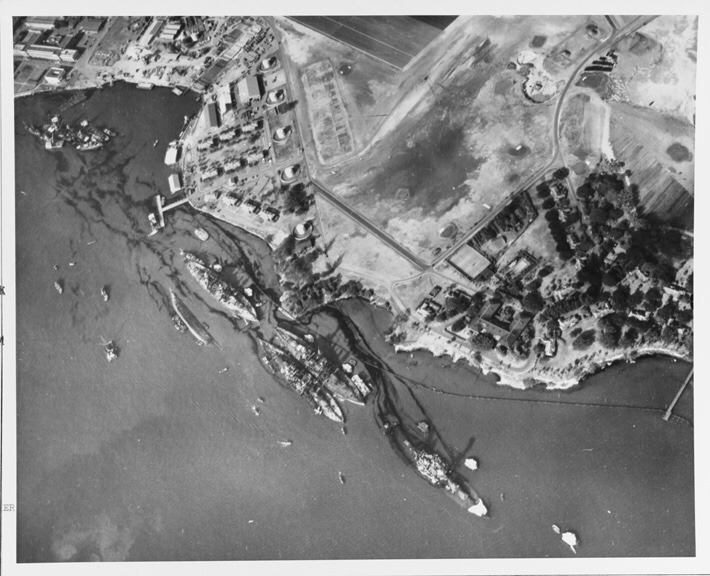
This aerial photograph of Pearl Harbor was taken three days after the attack. The black streaks are oil leaking out of the sunken ships. The USS Arizona is on the bottom right.
(Official U.S. Navy Photograph, National Archives)







 Tumblr Exodus