Wassail is an Old English beverage made of hot mulled cider. It means “Good Health.” It is traditionally drunk as an vital part of Wassailing. (Singing, drinking and refilling the bowl as the folks travel house to house in their village.)
Wassailing is a Medieval Yule English drink ritual to provide a healthy cider apple harvest for the following year.Folks would go wassailing from door to door throughout their village, it was considered a lucky sign to have them show up at your door.
Wassail is concocted by mixing in apple brandy, apple juice and other fruit juices. Winter spices include, nutmeg, cinnamon, allspice, mace and cloves.
Fruits are roasted such as small apples, kumquats and oranges then added to the Wassail mix. It is served out of large twelve handled apple-wood or silver bowl and ladled into silver or pewter goblets decorated with tied ribbons around the bottom of the goblet.
Wassail was also used as an offer to the apple tree spirit, it would bless their orchards, increase their harvest and drive away evil spirits.
“they couldn’t make the Maximoffs Jewish because they can’t make any reference to Magneto”
did u kno…. magneto is not the only jewish person in the world……
this is bullshit all my jewish friends are related to magneto
It’s true I am
Me too
also me
ok so I’ve been holding back but I need to tell you I too am related to magneto because I am jewish so
I feel like I need to step in here and clarify that not every Jewish person is related to Magneto.
Basically, all Jews can be divided into four groups based on tribal ancestry: Cohenim, Levites, Israelites, and Magnetoim. Halachically, only Jews who are descended from Magneto through the paternal line are Magnetoim, although you can become a Magnetoim through marriage. For example, my mother’s family are Levites, but because my paternal grandfather wasn’t Jewish, I was, for most of my life, an Israelite. However, my husband is a Magnetoim, so now I am, as well. When we have children, they will also be Magnetoim.
I hope that explains everything!
Also, if you are a non-genetically Jewish adoptee adopted by Jewish parents OR a genetically Jewish adoptee adopted by non-Jewish parents you’re automatically a Magnetoim. It’s a little known Halachic quirk.
Yeah, the Halacha on this is really wonky, because while adoptees automatically fall under the umbrella of Magnetoim, Gerim are usually designated as Israelites, unless they possess the ability to bend metal at will, in which case, they are halachically Magnetoim by default.
Yup! I remember hearing a d’var Torah on this a few years back. It’s really interesting!
So, uh, what about ethnic Jewish people who can trace their metalbending back to a Bei Fong on the gentile side of their family?
I think it depends on which side you’re inheriting your ability to control metal from. Jewishness is derived from the mother, while lineage is derived from the father. So it depends on a) if the Bei Fong converted, b) if they were male or female and c) if that side of your family it maternal or paternal.
A ger Bei Fong father on the paternal side would mean that you’re inheriting Magnetoim lineage (see above, re: gerim with the ability to control metal). On the other hand the Halacha is a little confused if the metal-control is not inherited from a Jewish parent, because a non-Jewish father usually makes you Israelite by default.
It IS possible to be an Israelite with metal control abilities– although, IIRC, many such modern Jews of liberal bent feel free to identify as Magnetoim out of solidarity. Some conservative Jews frown on that practice because it confuses lineage and might complicate the situation if we ever end up with a new Holy Temple.
DON’T WORRY DARLING, MUFFY AND CHARLES KNOW SOMEONE AT THE YACHT CLUB WHO CAN SPONSOR OUR APPLICATION. SHALL I REFRESH YOUR CHAMPAGNE, DEAR? HAVE THE CHILDREN CALLED? SWITZERLAND WAS A BOLD EDUCATIONAL CHOICE I JUST ADORE IT. I MUST GO TO THE SPORTS CLUB TO PLAY SQUASH WITH CHARLES BUT MY LOVE I WILL RETURN WITH DATES AND SOFT CHEESE I INTEND TO EAT OFF OF YOUR BODY ON A PILE OF MONEY ON THE WAY TO PARIS, SUCH A BLESSED AFFAIR THAT WILL BE!!! BON SOIR MA PETITE CHOU DON’T FORGET THE DOG CAN’T HAVE PATE!!!!!
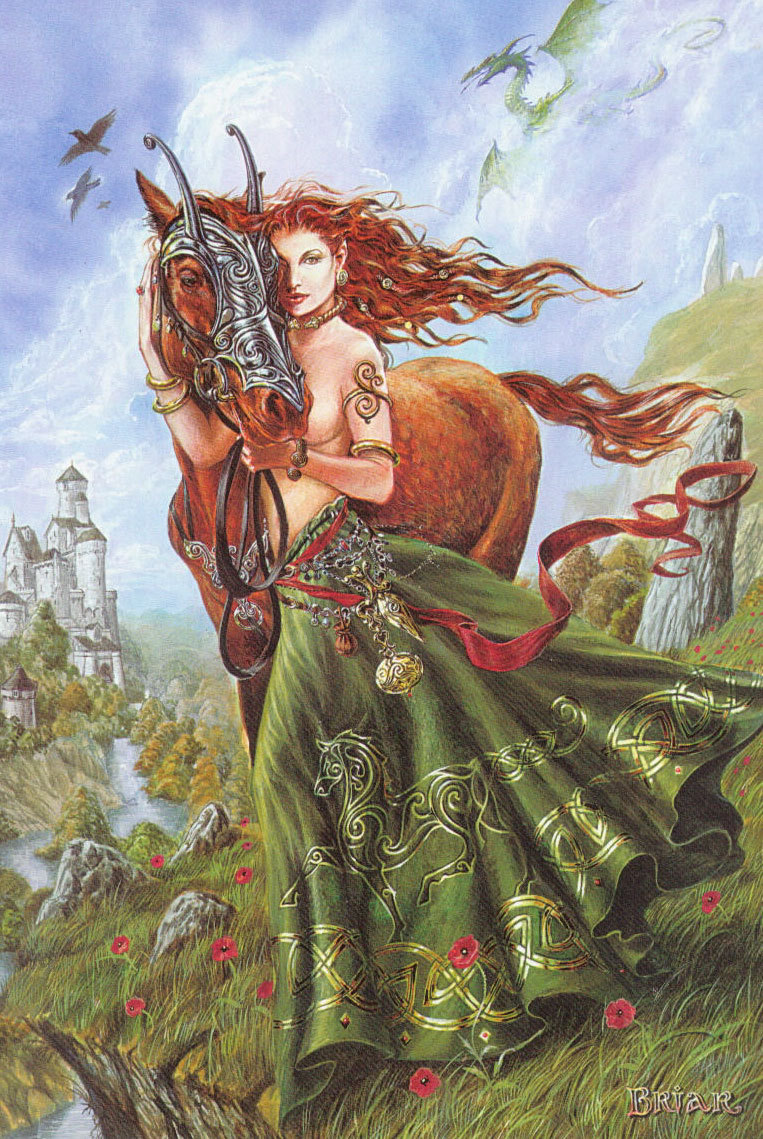
In Welsh mythology, Rhiannon is a horse goddess depicted in the Mabinogion. She is similar in many aspects to the Gaulish Epona, and later evolved into a goddess of sovereignty who protected the king from treachery. Rhiannon was married to Pwyll, the Lord of Dyfed. When Pwyll first saw her, she appeared as a golden goddess upon a magnificent white horse. Rhiannon managed to outrun Pwyll for three days, and then allowed him to catch up, at which point she told him she’d be happy to marry him, because it would keep her from marrying Gwawl, who had tricked her into an engagement.
Rhiannon and Pwyll conspired together to fool Gwawl in return, and thus Pwyll won her as his bride. Most of the conspiring was likely Rhiannon’s, as Pwyll didn’t appear to be the cleverest of men. In the Mabinogion, Rhiannon says of her husband, “Never was there a man who made feebler use of his wits.” After Pwyll’s death, Rhiannon married Manawyden. Her name, Rhiannon, derives from a Proto-Celtic root which means “great queen,” and by taking a man as her spouse, she grants him sovereignty as king of the land. In addition, Rhiannon possesses a set of magical birds, who can soothe the living into a deep slumber, or wake the dead from their eternal sleep.
Primarily, though, Rhiannon is associated with the horse, which appears prominently in much of Welsh and Irish mythology. Many parts of the Celtic world – Gaul in particular – used horses in warfare, and so it is no surprise that these animals turn up in the myths and legends or Ireland and Wales. Scholars have learned that horse racing was a popular sport, especially at fairs and gatherings, and for centuries Ireland has been known as the center of horse breeding and training.
(Long is the day and long is the night, and long is the waiting of Arawn.)
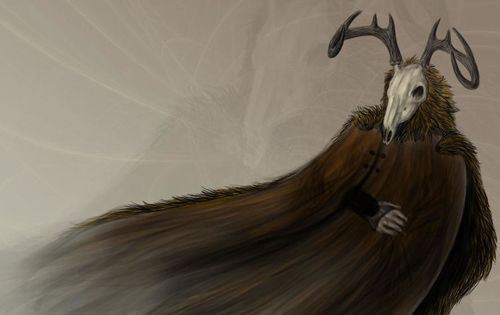
Arawn is a Welsh mythological figure who was the king of Annwn before Gwyn ap Nudd took the throne. I like to think he retired more than he died because, hey, even kings of the Underworld must get tired of their jobs sometime, right?
He features prominently in the First Branch of the Mabinogion. Pwyll, prince of Dyfed, is out hunting one day and he finds another pack of hounds feasting on a dead stag; he chases them off and allows his own dogs to feed from it. First thing to note is that, while perfectly nice, Pwyll does lack foresight and common sense. He can be kind of dumb. He looks at the other dogs and realises, “Well, shit, these are some weird fucking dogs.” Because really, what kind of normal dogs are shining white with blood red ears? He chases them off anyway.
Enter Arawn.
He gets kind of passive aggressive with Pwyll, telling him, “I know who you are but I’m not talking to you because you have offended me!” He doesn’t actually tell Pwyll what he’s done wrong until Pwyll, nice bloke he is, asks. (It also has to do with the fact that Arawn is of higher rank but he doesn’t actually tell Pwyll this until after Pwyll’s promised to pay him back.) So he tells Pwyll that, in order to make up for this offence, Pwyll has to go to Annwn disguised as Arawn for a year and kill this guy called Hafgan for him. In return, to avoid suspicion, Arawn will pretend to be Pwyll. They do this and, at the end of the year, Arawn is astounded to hear that not only has Pwyll been a good fucking king, he also hasn’t had sex with Arawn’s wife so she’s still seen as faithful to him. He thinks, “I’ve got a good fucking friend here.”
After Pwyll kills this guy for him, Arawn and Pwyll just keep getting closer and closer as chums. They send each other presents, like hawks and horses and hounds. They are so chummy by the end of this bit of the branch, that Pwyll drops the “prince of Dyfed” part and instead becomes known as “Pwyll Pen Annwn” instead (Pwyll, head of Annwn basically.)
Nice.
He kind of falls out of the Mabinogion from here on out. He’s referenced in the Fourth Branch, when Pryderi (Pwyll’s son, who really deserves his own post) basically tells Gwydion, “I’m not giving you these pigs for free; Arawn says I can’t.” But apart from that…eh, Arawn? Who’s Arawn? Some people think that a large part of the First Branch is actually missing, and that maybe Arawn is more closely linked to Pwyll’s marriage to Rhiannon and Pryderi’s conception than is actually indicated. Which, if that is the case, is fucking heartbreaking. The friendship between Arawn and Pwyll’s family is very long lived, and the gift of pigs to Pryderi probably indicates some incredible longevity (if not outright immortality) on Arawn’s part because by the time of the Fourth Branch, Pwyll is long dead and I’d imagine Pryderi at least pushing forty by this point because of the all the shit that went down between First and Fourth.
He pops up again in the Battle of Trees, because Gwydion’s brother Amaethon is nearly as much of a shit as Gwydion himself and steals a dog, a deer and lapwing from Arawn. Arawn and Amaethon do fight it out, but Gwydion fucks it up by animating an entire forest to act as his army and ultimately wins on behalf of his brother by guessing the name of one of Arawn’s men. This probably isn’t the end of Arawn but it may well have been the point where he threw up his hands and said, “That’s it! I’m done! Gwyn, you take over!”
Arawn’s most prominent reference in modern pop culture is in Lloyd Alexander’s Chronicles of Prydain, where he is the lord of death who is determined to fuck shit up in Prydain to the point no one can save it. His foe is, again, Gwydion. It’s actually quite interesting that Arawn’s name is given to an antagonist when, by all accounts, Arawn is a much much better person than Gwydion will ever be. Seriously, Gwydion’s a fucking dickhead. The reason is probably because death = evil, as well as the fact that the Christianisation of the myths often translated, or just plain referred to, Annwn as “Hell” when it was actually closer to the paradise of Heaven. Which might have something to do with the fact that Annwn was sometimes described as being underground.
But that, my friends, is a story for another time.






 Tumblr Exodus
