sansaskywalker:

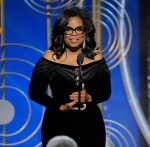
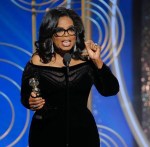
In 1964, I was a little girl sitting on the linoleum floor of my mother’s house in Milwaukee watching Anne Bancroft present the Oscar for best actor at the 36th Academy Awards. She opened the envelope and said five words that literally made history:“ The winner is Sidney Poitier.” Up to the stage came the most elegant man I ever remembered. His tie was white, his skin was black—and he was being celebrated. I’d never seen a black man being celebrated like that. I tried many, many times to explain what a moment like that means to a little girl, a kid watching from the cheap seats as my mom came through the door bone tired from cleaning other people’s houses. But all I can do is quote and say that the explanation in Sidney’s performance in Lilies of the Field: “Amen, amen, amen, amen.”

In 1982, Sidney received the Cecil B. DeMille award right here at the Golden Globes and it is not lost on me that at this moment, there are some little girls watching as I become the first black woman to be given this same award. It is an honor—it is an honor and it is a privilege to share the evening with all of them and also with the incredible men and women who have inspired me, who challenged me, who sustained me and made my journey to this stage possible. Dennis Swanson who took a chance on me for A.M. Chicago. Saw me on the show and said to Steven Spielberg, she’s Sophia in ‘The Color Purple.’ Gayle who’s been a friend and Stedman who’s been my rock.

I want to thank the Hollywood Foreign Press Association. We know the press is under siege these days. We also know it’s the insatiable dedication to uncovering the absolute truth that keeps us from turning a blind eye to corruption and to injustice. To—to tyrants and victims, and secrets and lies. I want to say that I value the press more than ever before as we try to navigate these complicated times, which brings me to this: what I know for sure is that speaking your truth is the most powerful tool we all have. And I’m especially proud and inspired by all the women who have felt strong enough and empowered enough to speak up and share their personal stories. Each of us in this room are celebrated because of the stories that we tell, and this year we became the story.

But it’s not just a story affecting the entertainment industry. It’s one that transcends any culture, geography, race, religion, politics, or workplace. So I want tonight to express gratitude to all the women who have endured years of abuse and assault because they, like my mother, had children to feed and bills to pay and dreams to pursue. They’re the women whose names we’ll never know. They are domestic workers and farm workers. They are working in factories and they work in restaurants and they’re in academia, engineering, medicine, and science. They’re part of the world of tech and politics and business. They’re our athletes in the Olympics and they’re our soldiers in the military.

And there’s someone else, Recy Taylor, a name I know and I think you should know, too. In 1944, Recy Taylor was a young wife and mother walking home from a church service she’d attended in Abbeville, Alabama, when she was abducted by six armed white men, raped, and left blindfolded by the side of the road coming home from church. They threatened to kill her if she ever told anyone, but her story was reported to the NAACP where a young worker by the name of Rosa Parks became the lead investigator on her case and together they sought justice. But justice wasn’t an option in the era of Jim Crow. The men who tried to destroy her were never persecuted. Recy Taylor died ten days ago, just shy of her 98th birthday. She lived as we all have lived, too many years in a culture broken by brutally powerful men. For too long, women have not been heard or believed if they dare speak the truth to the power of those men. But their time is up. Their time is up.

Their time is up. And I just hope—I just hope that Recy Taylor died knowing that her truth, like the truth of so many other women who were tormented in those years, and even now tormented, goes marching on. It was somewhere in Rosa Parks’ heart almost 11 years later, when she made the decision to stay seated on that bus in Montgomery, and it’s here with every woman who chooses to say, “Me too.” And every man—every man who chooses to listen.

In my career, what I’ve always tried my best to do, whether on television or through film, is to say something about how men and women really behave. To say how we experience shame, how we love and how we rage, how we fail, how we retreat, persevere, and how we overcome. I’ve interviewed and portrayed people who’ve withstood some of the ugliest things life can throw at you, but the one quality all of them seem to share is an ability to maintain hope for a brighter morning, even during our darkest nights. So I want all the girls watching here, now, to know that a new day is on the horizon! And when that new day finally dawns, it will be because of a lot of magnificent women, many of whom are right here in this room tonight, and some pretty phenomenal men, fighting hard to make sure that they become the leaders who take us to the time when nobody ever has to say ‘Me too’ again.“

U.N. Investigator On Extreme Poverty Issues A Grim Report — On The U.S.

kyhaven:

dr-archeville:

Philip Alston wanted to know: Just how bad is poverty in the United States?

He’s an Australian law professor who in 2014 was appointed as a United Nations special rapporteur on extreme poverty and human rights.  He contacted the Obama administration before the presidential election to get permission to undertake a fact-finding mission in the United States.  The Trump administration honored the invitation.

Now, after two weeks of reporting, Alston has released his preliminary findings.  And they present a bleak picture.  The American dream, he says, is an “American illusion.“  But he did find a few glimmers of hope.

Alston undertook his expedition with a series of questions: “Are those in poverty able to live with dignity?  What does a government do to protect those who are most vulnerable?“  To gather information, he traveled to Washington, D.C.; Los Angeles; San Francisco; Alabama; Puerto Rico; and West Virginia.  He talked to poverty experts, civil society organizations, government officials and regular people born or thrust into poverty.

In a statement released last week and in an interview for All Things Considered, he shared some of his conclusions.

Just who are the poor?  Alston says that many of them are children and women.  And they are all races.  “The face of poverty in America is not only black or Hispanic but also white, Asian and many other colors.”

He found that stereotypes serve to undermine the poor — and are used to justify not coming to their aid.  “So the rich are industrious, entrepreneurial, patriotic and the drivers of economic success.  The poor, on the other hand, are wasters, losers and scammers,” Alston told NPR.  As a result, he says, many people believe that “money spent on welfare is money down the drain.  Money devoted to the rich is a sound investment.”

He spoke to politicians and political appointees who were “completely sold on the narrative of such scammers sitting on comfortable sofas, watching color TVs, while surfing on their smartphones, all paid for by welfare.”

But Alston says he met people working full time at chain stores who needed food stamps because they couldn’t survive on their wages.

And he was shocked by the type of poverty he witnessed: “I saw sewage-filled yards in states where governments don’t consider sanitation facilities to be their responsibility.“  And “people who had lost all of their teeth” because dental care wasn’t covered by their health insurance plans.  And homeless people who were told to move by a police officer who had “no answer when asked where they could move to.”

“People in the U.S. seem particularly unable to stomach the sight of homeless,” he says, “yet are unwilling to enact policies to help them.”

Contrasts between the rich and poor abound.  “While funding for the IRS to audit wealthy taxpayers has been reduced, efforts to identify welfare fraud are being greatly intensified,” he says.  The wealthy also stand to benefit from advances in technology, while robots and automation threaten to take away jobs from people in low-skill labor positions, he says.

Meanwhile, the poor may not even be able to use the Internet.  Alston states that nearly half of all people living in West Virginia lack access to high-speed Internet.  “When I asked the governor’s office in West Virginia about efforts to expand broadband access in poor, rural communities, it could only point to a 2010 broadband expansion effort,” he says in the statement.  It’s not that they don’t want it; half of the state’s counties have reportedly applied for broadband assistance.  The U.N. considers the Internet to be a human right for its ability to support education, drive development and foster citizen engagement, among other things.

Not everything Alston found was grim.

“I was very impressed by a lot of the community organizing,” Alston told NPR.  “I was very impressed by a voluntary health, dental, even psychological care clinic that I saw called West Virginia Health Right, which has no full-time doctors or dentists but relies on volunteer services from those communities and ends up seeing 21,000 patients a year.“  He visited St. Boniface, a Catholic church in San Francisco, where people without homes could rest in pews during the day.

Still, he concludes that American innovation, money and power aren’t being channeled to address poverty — and there is a lot of poverty to address.  In 2016, 40 million people — more than 1 in 8 citizens — lived in poverty, according to the U.S. Census Bureau.  “The reality is that the United States now has probably the lowest degree of social mobility among all the rich countries,” Alston says.  “And if you are born poor, guess where you’re going to end up — poor.”

Alston also criticized the Republican tax reform bill that just passed in Congress.  He says it “stakes out America’s bid to become the most unequal society in the world.”

Last Friday, Alston met with State Department representatives.  He says he isn’t holding out hope that top-down reform will be implemented after his final report is released in the spring.  But he hopes that his work will motivate lawmakers, media and ordinary Americans to address poverty in their areas.  And maybe the United States will feel pressure from the international community after seeing the facts, he adds.

“There is no magic recipe for eliminating extreme poverty, and each level of government must make its own good faith decisions,” says Alston.  “But at the end of the day, particularly in a rich country like the USA, the persistence of extreme poverty is a political choice made by those in power.”

Sasha Ingber is a multimedia journalist who has covered science, culture and foreign affairs for such publications as National Geographic, The Washington Post Magazine and Smithsonian.  Contact her @SashaIngber

“The persistence of extreme poverty is a political choice made by those in power.” Need to plaster this quote all over the place.

U.N. Investigator On Extreme Poverty Issues A Grim Report — On The U.S.

bomberqueen17:

my dude, cooking: a vignette

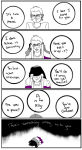
We are having pasta for dinner. Just– spaghetti with jarred sauce and frozen sausages cooked in the toaster oven. (The Found Cat special. With box wine. ❤ Hey they said to write what you know.)

#1 I did not know this before today, but. So. We have a big saucepan we use for pasta and such. It’s big, it’s got two small handles, it’s RevereWare, it was my grandma’s. It’s like, 4 quart capacity, at least. 

My dude measures cups of water into it to boil pasta. Me, I just stick it under the tap and turn it on and come back after a while and swear and turn it off and dump a little out so there’s headroom for the pasta to expand. But no. Dude actually uses a Pyrex two-cup measure to fill it, turning the tap off between cup fulls to dump it carefully. Fills it to the two-cup fill line. 

#2 I had seen this before but hadn’t really… remarked it… Dude takes a candy thermometer and hooks it on the edge of the pot as he boils it. “Water boils at 212,” I said. “And like, you know it’s boiling because. You know. It boils.” “I know,” he said. “… Why do you need a thermometer?” I asked, slowly. “I like to know how hot the water is so I know how soon it’ll be done!” he said, defensive. I looked at the thermometer. “See,” he said, “it’s at like, 190, which is pretty hot, but the water looks the same as if it was at 140, which isn’t hot at all.” “Okay,” I said. “So, how many minutes does it typically take for the pot to go from 190 to 212? How long do you have now?” 

He looked flummoxed. “I don’t know,” he said. “Longer than you’d think.”

So… what good does it do to know whether the water’s 140 or 190? It can’t possibly really help much with the timing. 

“It’s like a progress meter!” he said, gesticulating at it. “Look, it’s even got a dial!”

I could understand measuring the water exactly and using a thermometer if he was doing science to it, like writing it down or something, but he’s not, he’s just… making it more difficult than it has to be.

I left and went into the living room, because he was sulking that I was “judging” him. [n.b. he’s not really sulking, he’s pretending because it’s funny.]

I would absolutely steal that for a story but I cannot imagine what character would possibly measure the water and use a thermometer without also writing it down and timing it, or something. And if a character did, someone would surely shake their head and say ‘that’s a pointless bit of characterization, who would even do that’

Real life is so much weirder than fiction because real people are so fucking weird.

Well…..there is the trope that Steve Rogers can’t cook. I can just imagine Bucky/Tony/Bruce watching Steve trying to ‘science up’ dinner with it and then some sort of debate breaking out about it.

pearwaldorf:

Throughout her translation of the “Odyssey,” Wilson has made small but, it turns out, radical changes to the way many key scenes of the epic are presented — “radical” in that, in 400 years of versions of the poem, no translator has made the kinds of alterations Wilson has, changes that go to truing a text that, as she says, has through translation accumulated distortions that affect the way even scholars who read Greek discuss the original. These changes seem, at each turn, to ask us to appreciate the gravity of the events that are unfolding, the human cost of differences of mind.

The first of these changes is in the very first line. You might be inclined to suppose that, over the course of nearly half a millennium, we must have reached a consensus on the English equivalent for an old Greek word, polytropos. But to consult Wilson’s 60 some predecessors, living and dead, is to find that consensus has been hard to come by…

Of the 60 or so answers to the polytropos question to date, the 36 given above [which I cut because there were a lot] couldn’t be less uniform (the two dozen I omit repeat, with minor variations, earlier solutions); what unites them is that their translators largely ignore the ambiguity built into the word they’re translating. Most opt for straightforward assertions of Odysseus’s nature, descriptions running from the positive (crafty, sagacious, versatile) to the negative (shifty, restless, cunning). Only Norgate (“of many a turn”) and Cook (“of many turns”) preserve the Greek roots as Wilson describes them — poly(“many”), tropos (“turn”) — answers that, if you produced them as a student of classics, much of whose education is spent translating Greek and Latin and being marked correct or incorrect based on your knowledge of the dictionary definitions, would earn you an A. But to the modern English reader who does not know Greek, does “a man of many turns” suggest the doubleness of the original word — a man who is either supremely in control of his life or who has lost control of it? Of the existing translations, it seems to me that none get across to a reader without Greek the open question that, in fact, is the opening question of the “Odyssey,” one embedded in the fifth word in its first line: What sort of man is Odysseus?

“I wanted there to be a sense,” Wilson told me, that “maybe there is something wrong with this guy. You want to have a sense of anxiety about this character, and that there are going to be layers we see unfolded. We don’t quite know what the layers are yet. So I wanted the reader to be told: be on the lookout for a text that’s not going to be interpretively straightforward.”

Here is how Wilson’s “Odyssey” begins. Her fifth word is also her solution to the Greek poem’s fifth word — to polytropos:

Tell me about a complicated man.
Muse, tell me how he wandered and was lost
when he had wrecked the holy town of Troy,
and where he went, and who he met, the pain
he suffered in the storms at sea, and how
he worked to save his life and bring his men
back home. He failed to keep them safe; poor fools,
they ate the Sun God’s cattle, and the god
kept them from home. Now goddess, child of Zeus,
tell the old story for our modern times.
Find the beginning.

When I first read these lines early this summer in The Paris Review, which published an excerpt, I was floored. I’d never read an “Odyssey” that sounded like this. It had such directness, the lines feeling not as if they were being fed into iambic pentameter because of some strategic decision but because the meter was a natural mode for its speaker. The subtle sewing through of the fittingly wavelike W-words in the first half (“wandered … wrecked … where … worked”) and the stormy S-words that knit together the second half, marrying the waves to the storm in which this man will suffer, made the terse injunctions to the muse that frame this prologue to the poem (“Tell me about …” and “Find the beginning”) seem as if they might actually answer the puzzle posed by Homer’s polytropos and Odysseus’s complicated nature.

Complicated: the brilliance of Wilson’s choice is, in part, its seeming straightforwardness. But no less than that of polytropos, the etymology of “complicated” is revealing. From the Latin verb complicare, it means “to fold together.” No, we don’t think of that root when we call someone complicated, but it’s what we mean: that they’re compound, several things folded into one, difficult to unravel, pull apart, understand.

“It feels,” I told Wilson, “with your choice of ‘complicated,’ that you planted a flag.”

“It is a flag,” she said.

“It says, ‘Guess what?’ — ”

“ ‘ — this is different.’ ”

The First Woman to Translate the Odyssey Into English, Wyatt Mason