I want the recipe for the mustard-roasted potatoes, and if it’s any good, for the chicken and dumplings. If you please, kind sir.
IT IS. He is my culinary avatar. It was either that one or
I’ll post the mustard potatoes recipe if it turns out to be any good. The chicken and dumplings is more of a procedure than a recipe, it’s for the pressure cooker, but I’ll check in with Sci and see if she’s ok with me posting it.
Sci’s Mostly Fudged Recipe for Chicken and Dumplings for your Electric Pressure Cooker
(I use bone in chicken thighs, 4-6 of them for this recipe, because they are cheap and plentiful and I like dark meat better. You can easily use chicken breasts, but if you use boneless, I’d reduce the cook time a bit)
-Roll chicken in poultry seasoning, salt, pepper, thyme and whatever other seasonings you have and like. Let this sit in the fridge while you get the pot ready and get things going.
-Roughly chop an onion and a stalk of celery if you have it, including the leaves.
-Turn pressure cooker to sauté, add butter or oil just to shine the bottom of the pan. Saute onions and celery, then remove from cooker.
-If your oil/butter is gone, add a little more. Add chicken, brown on both sides. Cook in multiple batches if you need additional room.
-Remove chicken from the pot and add 3-4 cups of chicken stock or broth, a tablespoon of soy sauce and a splash of Worcestershire if you have it. This will both help the taste and also make the gravy look less… Anemic. Stir pot to make sure that any browned on bits are removed from the bottom of the pot and won’t end up burning. If you have fresh herbs (parsley, rosemary, ect) chop up a few leaves and toss ‘em in with the broth. Add veg and chicken, make sure that the broth covers the chicken. If it doesn’t, add a little more liquid.
-Close lid and lock, closing the steam vent. Set pressure cooker for 20 minutes.
-When time is up, quick release the steam, open the lid, and remove the chicken from the pot. Put the cooker back to ‘saute’ and bring the broth to a boil while you pull chicken off the bone or shred boneless chicken.
-Make dumplings from favorite recipe. I use bisquick’s, because I’m lazy. Consider replacing some of the liquid in the dumplings recipe with some of the broth, especially if you’ve added herbs, because it results in a much tastier dumpling.
-Once the broth has been back at a roiling boil, drop dumplings by small spoonful into the liquid. They will puff and spread almost immediately. Try to space them out a bit.
-Close lid and wait about five minutes with the pressure cooker on sauté and the steam vent closed.
-Open cooker, remove a dumpling and cut into it to make sure it’s cooked all the way through. If it’s not, put cover back on for another minute or two. If it is, remove dumplings to a plate or bowl. The broth should’ve absorbed some of the starch/flour from the dumplings and be closer to gravy now. If it’s not thick enough for you, stir a bit of milk into a tablespoon or two of cornstarch and add to broth to thicken. If it’s too thick, add just milk.
-The gravy will be a bit lumpy and not particularly attractive because of A. bits of dumpling and B. the veg. But dang it tastes good.
-Eat over rice, mashed potato, or just with the dumplings. You can toss frozen vegetables into the hot gravy at the end, or serve with roasted carrots, or a salad. Works well as leftovers.
Real Irish Food: 150 Classic Recipes from the Old Country by David Bowers (2014 paperback edition, ISBN-13: 9781629143149) is my favorite Irish cookbook for Americans. If you are an American and want to get yourself an Irish cookbook, make it this one.
Booklist’s starred review explains a lot of why it is such a good cookbook:
“Destroying long-held perceptions isn’t necessarily the aim of today’s cookbook author, yet that’s exactly what transplanted Dublin chef Bowers does, along with some very seductive photographs of his own. Through his personal introduction and an enjoyable narrative in every chapter’s upfront section, and every recipe’s preface, we learn, for instance, that corned beef and cabbage is a poor representation of Irish cuisine (and fish and chips, for that matter). Instead, expressing the same sentiment as his counterparts throughout the world, he insists the best prepared “native” foodstuffs rely on locally sourced, seasonal ingredients that nod to special traditions. A hearty breakfast defines the Irish heritage; he goes a few steps further than the porridge and Irish sausage routine by featuring tailored-to-contemporary-tastes vegetarian fry. Every one of his dozen topics, in fact, melds the past and present of the best in Irish culinary lore, along with explanations galore (e.g., “We’re not so big on little fiddly sweets … we tend to like our sweets a bit more understated”). Recipes aren’t necessarily compact or time-compressed or calorie-conscious; the final dish, though, will more than meet eaters’ satisfaction, regardless of nationality.”
From the blurb
People in Ireland are sometimes mortified by what Americans think of as “Irish food.” That’s because the real thing is much subtler and more delicious than any platter of overcooked corned beef and mushy cabbage could ever be. Real Irish food is brown soda bread so moist it barely needs the yolk-yellow butter; fragrant apple tarts with tender, golden crusts; rich stews redolent of meaty gravy and sweet carrots; crisp-edged potato cakes flipped hot from a skillet directly onto the plate. Forget meatloaf or mac and cheese—this stuff is the original comfort food.
Real Irish Food is the first comprehensive cookbook to bring classic Irish dishes to America with an eye for American kitchens and cooks, and with tips and tricks to help reproduce Irish results with American ingredients. Transform plain white fish by baking it with grated sharp cheese, mustard, and crumbs. Discover that celery takes on new life when sliced, simmered in chicken stock, and served in a lightly thickened sauce.
Recipes include: – Homemade Irish Sausages – Potted Shrimp and Potted Salmon – Finglas Irish Stew with Dumplings – Whiskey Chicken and Roast Goose with Applesauce – Boxty, Cally, Champ, and Colcannon – Apple Snow, Almond Buns, and Summer Pudding – Elderflower Lemonade, Black Velvet, and Ginger Beer – Cherry Cake, Custard Tart, and Brandy Butter
From hearty roasts to innovative vegetable dishes, from trays of fresh-baked scones to rich, eggy cakes, and from jams bursting with tart fruit to everything you can do with a potato, there’s no food so warm and welcoming, so homey and family-oriented, so truly mouthwatering as real Irish food.
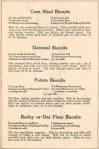
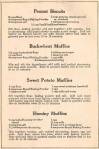
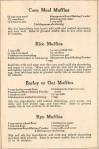
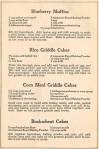
These cookbooks were prepared by staff at Forest Service Region 1 headquarters and contain recipes that were able to be prepared by fire lookouts for one or two people using the supplies provided.
I saw an excellent peasant bread recipe a while back and got all excited to try it, and then I saw this one somewhere too, and I left it open in a tab on my phone for literally months, and then I closed it. But I remembered the name of it because I saw it every time I opened a new Chrome tab on my phone. If you’re the person who posted a link to it, thank you! But I don’t remember why I had it open in a tab.
Anyway, I tried this recipe finally. Here’s the thing: I hate kneading bread. I mean, I like it, but i hate getting stuff on my hands, I had eczema between my fingers for like, a formative decade, so I just don’t get my hands wet much if I can help it, and, anyway. The point of this recipe, and what made it work for me, is that you literally never touch the dough with your hands. Not even to shape the loaves; they bake in bowls.
The version of this recipe on my phone was one of those ones with a blog entry beforehand where she waxes rhapsodic about vintage Pyrex, and goes on and on about which size bowl you gotta use.
I don’t have vintage Pyrex. I have two 1.5-quart Pyrex-ish casserole dishes.
I made this in those. It worked fine.
And here, the true acid test: I left the recipe scribbled on a piece of paper (I never can cook straight off the phone or computer, I always hand-write recipes) and said offhand to Dude that we could have more of that great bread, and he successfully made this recipe from my abbreviated-to-fuck recipe with no notes. It was a little underdone but that’s not his fault. (Except that he didn’t realize it would take two hours, which ok my handwriting’s bad but if he read the whole recipe or paid attention the whole time I was making it while he was in the room, he’d know that. So he started at like, 6pm. Don’t do that.)
So anyway. Here’s my rec. Casserole dishes work fine if they’re smallish.
I bet… *whispers* I bet you could do this in a loaf pan. Is that blasphemy? I bet you could. I have loaf pans, I might use them next time.
A few months ago, I picked up a little cookbook. Some of the older Jewish housewives among you may have heard of it. It’s the “Jewish Festival Cookbook.”. It’s a slim, innocuous little tome. And lemme tell you. This little one is special. More special than any other cookbook in my collection. Published in 1954, it tries to hide the scars of family lost in the holocaust. And it does a very good job. But for what is, in essence, a manual of what to serve and how to observe Jewish holidays and keeping Kashrut/Kosher/Pareve/etc. But underneath, you see and feel the sadness and scars. I love this little book, “The Jewish Festival Cookbook”, because unlike my 3 Joy of Cooking and 4 Fannie Famers, or any other of the 100 or so food and cook books I have, this book has soul. A defiance and a sadness that most books, even fiction or non-fiction never achieve. And I really love the intense sense of defiance and remembrance this book imparts throughout.
So, without further ado and because I transcribed it for @ogtumble, and he wanted me to post it.. I use it without permission of the authors or their respective estates, and I sincerely apologize for that. If I knew who you were I’d happily pay you for use. There are a couple notes at the end that are by me.
==================
From “The Jewish Festival Cookbook”, by Fannie Engle & Gertrude Blair, (1954), Pgs. 84 to 86.
Among the most famous of these traditional dairy dishes are cheese latkes, and many legends have grown up about them. It is told that in year gone by Sephardic women of Spain & Portugal would get together on the last night of the festival for a party of their own. They would enjoy music and laughter and amusing stories, and great quantities of cheese latkes were served throughout the evening. Instead of being prepared with the familiar spread of jam or syrup, they were sprinkled with olive oil, symbolic of the ancient miracle.
Judith’s Cheese Latkes (cheese pancakes)
3 Eggs, well beaten
1 cup Milk
1 cup dry Pot Cheese
1 cup Flour
1 teaspoon Baking Powder
½ teaspoon Salt
To the beaten eggs, add milk & cheese. Sift the dry ingredients together and stir into the eggs. Blend to smoothness. Drop by spoonfuls into hot fat in a frying pan. Cook to delicate brown on both sides. Serve with syrup or jam. Serves 4 or 5.
In some European countries where Jewish families settled, it was difficult to obtain cottage cheese in wintertime. Devoted as they might be to latkes made with cottage cheese, they had no choice but to find a worthy substitute for this ingredient. Their success may be judged by the present-day popularity of potato latkes. These are an inspired use of the potato, one of the most commonly used vegetables in those parts. Potato latkes now enjoy international fame. They are unquestionably the most popular of Chanukah dishes.
Potato Latkes (Potato Pancakes)
6 medium-sized Potatoes
1 small Onion
1 teaspoon Salt
1 Egg
3 Tablespoons Flour, Matza Meal, or Bread Crumbs
½ teaspoon Baking Powder
Wash, pare, and grate raw Potatoes. Strain but not too dry, and use the juice for soup or sauce. If juice is retained, a little more flour will be needed for thickening. Grate and add the Onions, add Salt and the Egg. Beat well. Mix remaining ingredients and beat into Potatoes; mix well. Drop by spoonfuls into hot fat that is deep enough to almost cover the cake. Brown on both sides. Drain on absorbent paper. Serve with applesauce, if desired. Serves 4 or 5.
Every country, and often, so it would seem, every family, has its own favorite latkes. Our Polish butcher who comes from Schochov tells us that his mother taught him this rhyme when he was a boy.
“If latkes you would make, Salt & eggs and flour take. Eat with jest and song and rhyme At the festive Chanukah time.”
His mother’s ratzelach, which are really latkes, are still so vivid in his mind that he cannot think of Chanukah without remembering them. Here is her recipe as he told it to us, explaining that he had noted the ingredients she used while he helped make them by beating the eggs.
Ratzelach from Poland (Pancakes from Poland)
1 cup Flour
½ teaspoon Salt
1 cup Milk
3 Eggs, well beaten
Confectioner’s Sugar
Sift together the flour and salt; make a well in the center and pour in the milk; stirring, from center out, to form a smooth batter. Add eggs and enclose with folding motions. This should be a very thin batter. Melt a very little fat in a medium-sized frying pan, greasing the surface well. When hot, pour in just enough batter to cover the bottom of the pan, tilting it from side to side to spread the batter to the edges. Brown first on one side and then on the other. Stack 5 or 6 ratzelach, sprinkling confectioner’s sugar or crushed sugar between the layers; then cut in to wedges for serving. Makes about 15 ratzelach. Serves 2 or 3.
Crushed sugar has little meaning in a modern recipe, but not many years ago sugar was available only in long hardcones. Pieces were broken off with a wooden mallet, then pounded fine between towels. This is the crushed sugar, often a light brown, that used to be served over stacks of ratzelach.
(Personal note: Two things. I have no clue what Pot Cheese is. I’ve never heard of it and can’t find any information on it. I imagine that you could just use a decent melting cheese. Also, while I was transcribing this, it hit me. One of the major patterns of immigration was that adult children emigrated, while parents usually stayed in the home country. Upper middle class immigrants usually brought mom & dad over. But for middle middle class and lower, this was a luxury that was frequently unaffordable. It is entirely possible, that the Polish butcher’s mother was lost in the holocaust, and she should be remembered when you make the ratzelach.)
For a cookbook published in 1954, I think it is very likely that Mmes Engle and Blair, the Polish butcher from Schochov, and his mother are all “of blessed memory” at this point. Blest are we who get to benefit from their lives, stories, and the works of their hands.
Pot cheese is a type of soft crumbly, unaged cheese. It is very simple to make and also highly versatile making it a very popular cheese but it may be hard to find in stores. Pot cheese is in the midway stage between cottage cheese and farmer cheese. It is somewhat dry and crumbly but with a neutral, creamy texture and is very high in protein. It is most similar to cream cheese, ricotta, and the Mexican queso blanco. In New York and its environs it was frequently served in a bowl topped with cut-up vegetables.
In Austria, Topfen (pot cheese) is another name for Quark.




 Tumblr Exodus