why dont we talk more about how mcu natasha is some kind of fucking technological wunderkind though?
i mean—really. yes, she is a kickass superspy who could crush you with her thighs. yes, she is a master manipulator who can read you like a children’s book and make you wonder which way is up. yes, she is vulnerable and strong and works with complex motivations towards a goal that’s not quite redemption but always in the service of doing what she feels is the right—and oftentimes the hardest—thing, the thing no one else can or will do. yes, she is pretty much the bamfiest bamf who has ever bamfed in all the ways i just described.
but im also pretty sure she’s kind of a computer genius.
i don’t think it’s any accident that natasha is the one who gets rhodey’s systems back online in IM 2. i don’t think it’s any accident that natasha is the one who gathers intel on the Lumerian Star, then tries to decrypt the flash drive in that Apple store and even SAYS (not even smugly, just matter of factly) that the person who developed the encryption is only slightly more advanced than she is. i don’t think it’s any accident that natasha is the one who hacks SHIELD’s systems and airs their dirty laundry, and she makes it look deceptively easy even though i’m guessing it’s hard enough that your average, idk, SHIELD technician can’t do it.
natasha navigates the keyboard with ease. her face is the picture of concentration and curiosity. she does things that im so used to seeing the requisite geek guy doing, and the fact that she does that despite being originally positioned as the femme fatale with nothing more to offer than a catsuit and a pretty face? AMAZING.
i’m just obsessed with exploring the idea that natasha’s skillset is way more diverse than acting as the muscle, or the confidante, or the investigator, or the hulk-tamer. that she is intelligent in several ways, in a similar way to another avenger, in fact (when you think computer hacker, you think tony, dont you? HA! natasha will show you) and that it’s a subtle but important intelligence that actively moves the plot along.
i’d love to see more of what natasha does. what she knows. how she learned. but im not going to lie, this facet of her? the one that lives out in the open and is so important but so often unseen? i want to know more about that.
Tag: meta
The other thing people overlook re: Bucky’s draft status is that *almost everyone* was drafted. Shortly into the war, inundated by enlistees, the government specifically requested men to wait for their local draft board to contact them, to give the military more control over pacing and logistics. And on 5 December 1942, President Roosevelt issued an executive order ending voluntary enlistment. Steve trying to enlist is anachronistic, and Bucky being drafted is unremarkable.
Yeah, I think this is one of those things where, from the other side of the Vietnam War, that’s what we think of when we think of the draft—young men desperately hoping their number wouldn’t be called, trying to dodge, and so on. But that whole connotation was specific to that war; it just wasn’t the same in World War II.
I think the fandom’s notion that Bucky being drafted somehow makes his military service less distinguished (and therefore, being Steve’s friend and a Good Guy, he must have volunteered) is very much informed by the post-Vietnam anti-conscription sentiment in the US.
Really, it doesn’t matter whether Bucky was initially drafted or not; he volunteered to join the Howling Commandos when he could have requested reassignment to a non-combat position due to his ex-POW status, so his willingness to serve his country (and Steve) is certainly not in question!
Chronically ill Steve Rogers
(The images in this should be collapsed to begin with because, well, one of them is a plate of raw meat that Steve is presumably eating for breakfast. The last image is a gif. Contains discussion of illness, treatments, ableism and eugenics. I should point out first that I don’t have any of these conditions other than asthma.)
So many fics focus only on skinny Steve’s asthma and portray him as being as minimally disabled as possible. Let’s just remember that according to all the various sources (the Disneyland poster, the form Steve hands in to enlist in the film) that Steve:
- Had astigmatism – so he’d’ve had poor eye sight. I’ve also seen sources that say Steve is colour blind although I couldn’t find them again for writing this or to check what kind of colour blind Steve could be – it could be anything from red-green colour blindness to trichromatic colour blindness, but I’m not sure.
- Had scoliosis – this is where the spine bends in a way that isn’t part of the typical S-shaped curve, so his spine would’ve bent to the side. It’s not a life threatening condition but it can be quite noticeable and I’ve not seen a single fic that’s taken it into account.
- Was partially deaf. Again, I’ve never read a fic that mentions anyone speaking up for Steve to hear.
- Had arrhythmia, an irregular heartbeat; he also had heart palpitations, high blood pressure and the more generic heart trouble. I’ve also seen something saying he had angina, chest pain caused by restricted blood supply to the heart muscles.
- He also had rheumatic fever at some point which causes red ring-like rashes on the limbs and can affect the brain, joints and heart – which given Steve already had heart problems is not a good thing. It affects older children up to the mid teens. It is treated with aspirin – which is hard on the stomach and unfortunately for little Steve, he also has:
- Stomach ulcers. These are extremely painful and can be caused or made worse by drugs like aspirin. Stomach ulcers can be very dangerous if complications arise.
- Another stomach complication Steve had was pernicious anaemia, which until the 20s was basically a death sentence. It’s a condition where an enzyme necessary to absorb vitamin B12 is not produced and the patient becomes progressively more anaemic until they suffer complications such as neurological damage or simply die (hence the word “pernicious”). Until 1928 the only treatment was to drink copious quantities of the juice from raw liver (more than a pint a day) or eat half a pound of raw liver a day, which contains the enzyme (cooking would destroy the enzyme). From ‘28, Steve was presumably relieved to hear, a liver extract was produced so that the quantity of liver juice one had to drink was 50x less and was also cheaper. The other symptoms were pretty much the same as other kinds of anaemia.
What do you mean you aren’t hungry?- Steve also had flat feet (less serious but with everything else this kid isn’t running anywhere)
- He had scarlet fever as a child, which causes a sore throat, bright red rash, and can kill – especially as it can cause heart complications.
- Steve’s mother was diabetic- his admission form states that he has a parent or sibling with diabetes, and since it’s automatic disqualification from the army and he has no siblings, that means it must be his mother (unless you don’t think Steve’s dad served in the army at all and he’s just lying to serve with Bucky.) Steve has a higher risk for diabetes. This in itself isn’t going to limit him at this stage in the proceedings, but it doesn’t make him popular with eugenicists either.
- Generally his respiratory system is struggling – he gets sinusitis and frequent colds to go along with his…
- Asthma.
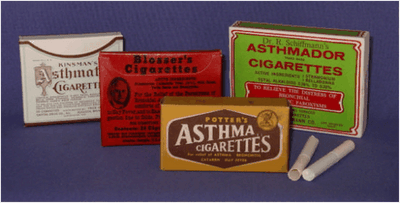
Asthma can be pretty dangerous especially for someone with a heart condition, since symptoms of a severe attack can include arrhythmia. In the 1930s, inhalers were difficult for one person to use (especially if that one person was having an asthma attack), but asthma cigarettes were easily available, considerably cheaper, and hallucinogenic. They did work to a degree, but were nothing compared to today’s relievers. There were also dry powder inhalers, and if you could get hold of one, atomizers and electronic nebulizers for delivering medication.
Beyond this, in the 30s, 40s and 50s, asthma was considered a psychosomatic condition – an imagined product of mental illness due to the child crying inside the sufferer during an attack – so talking therapy was used as treatment as well. Steve would’ve been considered both physically frail and mentally ill because of his asthma.- Really, it isn’t a surprise that to go with this he has “nervous trouble“ and suffers from fatigue – hell, it’s tiring just to be Steve. It’s also no wonder that he’s so small, given that his body was under so much stress whilst he was growing.
So what does this all mean for little Steve? Pre-serum Steve is chronically ill from birth or childhood, probably due to complications in birth or his earlier illnesses (there seem to be a lot of things happening in his respiratory system and stomach), and some of which is evidence of what at the time would be considered poor genetics.
People often associate eugenics with the Nazis, but its real home is rooted in the 20th century USA, and it was in full swing in the 20s and 30s. Many German eugenics research programs received their finding from the US before the war. Although as a white man living in New York Steve would’ve been safe from forcible sterilisation or euthanasia, public sentiment was overwhelmingly supportive of casting anyone framed as a dependent on the state or a fault in the gene pool cast out.
Eugenics was legal and mandated, and whilst Steve was growing up, thousands of impoverished women and state dependent children, especially women of colour and mentally ill women were forcibly sterilised by the state, and many people living in mental institutions or care homes were allowed to die of neglect.
His mother’s death due to TB would also have made him a target for this kind of thinking – in fact, tuberculosis was used as a method for targeting those with “inferior” genetics (whilst “superior” individuals would supposedly be immune) for euthanasia for eugenics purposes – in one mental institution, new patients were given infected milk to kill off those susceptible.
Ironically, Captain America and the superserum are essentially an experiment in eugenics, which really reflects just how widespread this attitude was in the 40s. I’m analysing Steve for purposes of fic writing and not any genuine critical analysis here, but there’s no getting away from it: they put a chronically ill, disabled man in, and they get a genetically engineered super-soldier out.
Steve actually surviving both rheumatic and scarlet fever with asthma, heart problems and no antibiotics is pretty much a miracle in itself at this stage, and I guess we should all be grateful that Sarah Rogers was a nurse, because things like half decent atomizers to treat asthma were expensive and hard to obtain.
When Bucky is talking about Steve having nothing to prove, he’s not just talking about a small guy who is too sickly to join the army – he’s talking about someone who would’ve been considered an invalid and unworthy among his peers and made to feel like a dependent all of his life. Steve has to prove everything to everyone except Bucky, the only person who values Steve for himself and not against criteria of fitness or health, and most of all he needs to prove to himself that the things he’s internalised about himself aren’t true.
tl;dr: Basically, it’s time to start portraying Steve accurately in fic and stop glossing over aspects of his health that aren’t as fun to write as an asthma attack.
Post-serum, he also probably still retains a great many reflexive habits. He probably wakes up in the morning and has to remind himself he’s huge and healthy. He probably has a hard time interacting with the chronically ill and disabled, because he was that way until recently, but he also got his science magic cure that nobody else gets.
I wonder if there’s room in MCU fics to write about Clint’s partial deafness from the comics, and have Steve be a part of the discussion. Or maybe…
Steve looked over the line of tablets on display. He remembered when “computer” described a human being, but a little experimenting with the floor models proved there was nothing to worry about. The devices were very intuitive, much more so than machines he had dealt with… well, was it nearly seventy years ago, or was it just a couple? He was never quite sure how to think about his personal timeline.
"You’re, uh, picking that up faster than I’d’ve expected,” observed Peter. “No offense, Ca- sir- Steve?”
The teen fumbled over what to call him. They’d met through Stark, who had offered the boy a job, both in costume and out of it. And for Peter, there was no question it was still a costume. He hadn’t made it a uniform, and Steve was hoping to keep it that way. Stark was hoping that the young Parker could help “Rip Van Winkle” acclimate to modern times, as he had put it.
“I’m not in uniform. Just Steve is fine, Peter,” Steve smiled that crowd-pleasing smile. “Contrary to what Mr. Stark thinks, I’m actually pretty interested in all of this. I think he needs to learn that ‘old’ doesn’t mean ‘old-fashioned’.”
Peter stammered an acknowledgement, and then reached up, bringing a finger to the bridge of his nose, and blinked in surprise before flushing ever so slightly (so little that anyone without enhanced senses probably wouldn’t have noticed), and looking away. Ah.
“It’s really the other things that are tricky to get used to,” he said, nodding to Peter. “Like… I keep squinting to see stuff that’s far away, even though…”
“You-” Peter looked up, startled. “You, oh! Wow, I didn’t- I mean, me too, yeah.”
“Some old habits, you know?” Steve looked into the distance for a moment, though he wasn’t sure what he was looking for. Maybe just to remind himself that he could? He looked back, and down to the tablet in his hands. “Say, I was wondering, could I use the stylus to draw on this?”
“A strong will can fuel a frail physique.” -Ra’s al-Ghul (supposedly quoting Napoleon)
Just a little addendum from a person with a different kind of scoliosis
Aside from the typical depictions of scoliosis where one shoulder lies lower than the other or the spine is bend in an odd shape, there is also another type that features rotation of the vertebrae. Usually affects those closer to the tail-end of the spine and can exist in 4 stages ranging from barely noticeable to disabling. It’s measured in degrees of rotation.
Basically your spine twists its components at unnatural angles CW or CCW and since the ribs are attached to the vertebrae they also twist, often warping or stressing internal organs(like guess what-the lungs and the heart as if Steve didn’t suffer from enough shit). It also puts unnecessary stress on the muscles.
It is treatable nowadays, via exercises in stage 1 and straightening corsets in stage 2-3(I’m not sure about 4-I think medical intervention is needed) but I have no information on treatments back in the day.
So this is another possibility to consider when you’re writing skinny!Steve.





Deconstructing Captain America: The Winter Soldier
“But I knew him.” – The Winter Soldier
This line from the Winter Soldier moments before he was about to be electrocuted is not just stating that James Buchanan Barnes has remembered his best friend Steve Rogers. It was more than that.
It was a plea.
Bucky Barnes was pleading Hydra. He was pleading them not to wipe him. He was pleading them not to make him forget again. He knows, after he’s wiped yet again, they’re going to send him back on the field to finish the mission. He was pleading them not to kill the man on the bridge, a man he knows he knew. He was pleading for help, because he knows, after he’s wiped, it won’t matter if Bucky Barnes knew you; he will definitely kill you if he was commanded by Hydra.
He’s like a child, trying to argue with his parents when they told him not to play with the other children.
He’s been trying to fight Hydra. He’s been fighting Hydra since 1945.
And this fact makes me fall in love with both the character named James Buchanan Barnes and the actor named Sebastian Stan.
You know, as much as I think Sebastian’s reactions are hilarious, the mainstream entertainment media’s unified insistence that Bucky is the villain fucking scares me. Not only is it grade A+ unquestioning victim-blaming, they’re also doing exactly what Hydra wanted them to do….
“The part that scares me even more about this is – I wonder how much of this is conscious? Because if they don’t even recognize what they are
doing, and I’m betting most of them don’t, that is terrifying to the
next level.”- jamie-sfThat’s kinda what I was thinking about when I made the post tbh. When I said deliberate I didn’t mean the heads of media corporations sit around like Bond villains petting cats, twirling their mustaches and deciding to make a big conspiracy over Bucky being the villain, although some people took it that way.
I meant more that I have never seen any media outlet correctly identify Pierce as the villain, even though that’s exactly what the movie is about, and the fact that all of them do it trumps coincidence. Why they all do it could be a variety of things, from them honestly not having seen the movie and relying on other people’s reports, to them not thinking about the content they’re watching and not questioning ingrained societal values, to assuming that because Steve directly fights Bucky that makes him the villain. (As an aside, there’s something really interesting about Steve and Pierce being the main characters, being foils, and yet their final conflict is not with each other but with secondary characters. I might meta that later) It could be a mix of reasons.
I just get concerned about it because by all of them taking this stance, it reinforces the idea that Bucky is the villain is the “correct” interpretation, and people who don’t really think about what they watch will absorb that message and not question it, and they will not realize that Pierce is the real villain of the movie and that Bucky is innocent.
It gets even more dangerous in America, because it teaches not to question white rich government-based power, instead to blame the innocent in the crossfire, and considering we’ve seen the direct, blatant misuse of government power not only in the last couple months but within the last half a decade or so, this is a very, very, very dangerous thing to be teaching people, intentionally or not.
While I don’t think the individual reporters themselves are necessarily doing something wrong on purpose, seen within the greater context of media influence (and the media does have influence, a huge amount of influence on what we know and how we think) this becomes a huge problem.
Okay -responding to a couple of different points since I do agree with you but I also didn’t respond in much detail at all.
I suspect it is mostly unconscious/subconscious. The Winter Soldier is the villain. His name is in the title. He’s dressed in black. He shoots (and temporarily kills some) of the good guys. He’s literally coded as the bad guy of the piece by the simplistic code of superhero movies/comics. [Batman aside.] [And after I wrote this I see you said the same above….]
But there is also the deliberate level of it too. The Fox News aspect, if you will. The deliberate misleading of the public to see the older white well dressed male in power as simply doing as he sees best. I have no doubt there are people who walked out of that film angry that Pierce got killed. He was leader and he was trying to protect people. It is a great twist on the early American 70s political thrillers that the Russos and the writers were inspired by. I do wonder if the mass media machine deliberately is encouraging that impression, which is also terrifying.
There is also the coded power of the military here (and echoes of the Cold War with the Soviet slugs [side note: that is really archaic language to be using around military hardware. They simply wouldn’t call it that in the real world.] by having the person in power doing questionable things with it. From the STRIKE teams on the ship, to chasing down Steve, to the Winter Soldier’s support: this is all mercenary or intelligence agencies, mostly in uniform. And they are doing the bidding of the power structure. It’s a parallel to the ‘goodness’ of the military in First Avenger too.
Steve – Pierce
I do wonder if there is an echo here of what Steve might have been if he’d lived the same life and time periods that Pierce did. There have been a lot of metas about how they look alike ( a young Redford has more than a few similarities to C. Evans) but their dedication to their idealogies is not dissimilar. They are incredibly stubborn and idealistic men. They are both charismatic. They are both driven by fear but with very different outcomes.
Sebastian Stan
Finally, I was bemused and then pleased when he was asked at Sundance if kids were afraid of him. His response was (approximately) that they patted him on the arm and felt sorry for him. So children do see the truth of the story.
man, all you gotta do is to imagine steve doing all of these post-cap2:
1. pressed shoulder to shoulder with bucky on the couch, watching their old war tapes, ha you looked like such a weiner with your hair like that
2. getting calls from natasha!! all hours of the night and day. steve’ll be jogging or something and his cell will buzz and it’ll be from an unlisted number, hey what is your opinion on [deep philosophical/moral/political issue] and also rhodey wants your rsvp for the batchelor party, he knows you’ve been avoiding him and wants you to know that despite what tony says there’s NOT going to be strippers.
she also gives him rides to and from visiting peggy. on the drives back she plays harry james and lets steve be silent and nostalgic, looking out the window
3. sam loves open-air cafes, loves any excuse to eat outside. every sunday, he and steve will pick a new one to brunch in, obstinately to round out steve’s 21st century culinary education, but mostly so that sam can update his not-so-secret foodie blog. as they sip their coffee after the meal, steve brings out a small sketchpad and draws buildings, people, and a lot of sam’s face as he hunches over his laptop, muttering about the consistency of chocolate mousse.
4. bucky’s crammed into that seat by the window, leaning into steve’s space as he hotly debates the artistic merits of inception versus early hitchcock films with natasha, who’s sitting in the perpendicular seat. it’s dissolved into russian and steve’s worried that they’re either conspiring to kill someone or go halfsies on a wedding present for tony & pepper without cutting steve in like they promised. sam’s hanging onto the rail by steve’s shoulder, scrolling through imgur on this phone. occasionally he’ll shove it in steve’s face and 9/10 times it’ll be a picture of some kid dressed up like captain america. or falcon. steve can’t help but smile, soft and ridiculous, every single time.
(they’re going out drinking, they’re going home to crash, they’re going to kill a man. doesn’t matter. they’re young-ish adults in the city that never sleeps. they’ll figure it out.)
You know, as much as I think Sebastian’s reactions are hilarious, the mainstream entertainment media’s unified insistence that Bucky is the villain fucking scares me. Not only is it grade A+ unquestioning victim-blaming, they’re also doing exactly what Hydra wanted them to do. Scapegoat the Winter Soldier, so that people won’t think about the actual villain aka Pierce.
Pierce, the middle-aged white man in a position of government power.
You can’t tell me this isn’t deliberate.
The part that scares me even more about this is – I wonder how much of this is conscious? Because if they don’t even recognize what they are doing, and I’m betting most of them don’t, that is terrifying to the next level.
#steve’s wardrobe is the very first evidence of bad characterisation vs good characterisation (x)
ok but no. steve in the first gif is trying to feel comfortable in a strange world., still wearing things that are familiar. pleated pants and plaid shirts tucked in and belts.
steve in the second gif has had time in the world. he has learned to be comfortable in tshirts and blue jeans. These are two different characters, for all that they’re both steve rogers, and both of them are accurate and correct.
I both agree and disagree with everything said above. I disagree that it’s as simple as bad characterization vs good characterization – first of all, in the first gif, those are clothes Steve picked out for himself, presumably. In the second? He’s incognito. He’s on the run. Given his druthers, he’d much rather be in a white t-shirt, jeans, and a leather jacket. His taste in clothes between the two movies hasn’t changed one bit. You see him on his bike during his Sadness Errands, or at the end in the graveyard?
Simple, durable, utilitarian. Everything that a button-up shirt and pleated pants would have been in the 40s. His “style”, such as it exists, is exactly the same. The only time he wears something different is when he’s on the run with Natasha and trying not to look like himself.
In Avengers I do agree he’s trying to hold on to something with his clothing choices, where and how he works out, and the way his apartment is furnished. The look of his apartment, in fact, doesn’t change all that much between films – even though it’s been two years and they’re in two different cities. He still prefers a turntable, still keeps his furnishings modest and his colors muted. But honestly? How much of that was Joss Whedon’s characterization and how much was the stylist and set designer, I don’t know.
I hate 80% of the way Whedon writes Steve. He doesn’t get him. I hate that Whedon doesn’t have him engaging far more personally with Bruce Banner, the one person who probably could reach Steve himself other than Natasha. Banner is in his situation in part because of Steve, or at least that’s how it’s presented, and that would be something that Captain America takes personally. He of all people would see Bruce as human first, risk factor second. He would see Tony as a bully, not as as someone “putting the ship at risk.”
And for god’s sake, when has Steve ever been one to follow orders? When has he ever counseled others to do so? When has he ever been satisfied with just knowing and doing what he’s being told? Oh, I’m not supposed to try and enlist in the army multiple times or falsify my enlistment papers? Too bad, I’m gonna anyway. Oh, you say the prisoners are behind the lines and that Bucky is probably dead? Well, let’s prove it. Let’s see. He’s a commander. A good man. Not a good soldier. Winter Soldier gets that about him. Never for a moment does he go in not questioning authority. Never for a moment does he look at his superior officers and say “Okay, we’re good, I trust you.”
There’s also the fact that he has two different “faces”. His institutional persona and his personal one. When he’s Captain America, he’s solid, he’s implacable, he doesn’t share his feelings and he doesn’t voluntarily leave himself open to ridicule or derision. Whedon writes Steve as broadcasting his insecurities in an institutionalized space (“I understood that reference”) as though he would joke when he’s representing the shield and the people who helped him obtain it. He might ask what a reference means, but to interrupt with the fact that oh hey for a moment he actually understands what’s going on? No. (Can you tell I hate that line I really hate that line.)
He’s an icon in those moments. He’s not just Steve Rogers. He can’t be. He needs to be better than he is, and Joss Whedon never writes him as though he understands the distinction. He doesn’t get the division between the selves that Steve has – his institutional persona and his personal internal life.
It’s different when Steve’s in one-on-one emergency battle mode with Tony (“It seems to run on some kind of electricity.”) There, it fits. There, it’s Steve being Steve. When he jokes with Erskine during project rebirth, or tells Peggy that girls don’t want to dance with someone they might step on – it’s all one-on-one, with people he respects and to some degree trusts or admires. Erskine is a friend and a person who gave him the chance of a lifetime. Peggy is someone who is never shown looking down on him before that point, only reacting positively when Steve is… well, himself.
Steve as Captain America does not show weakness in the face of the institution. If he makes a joke, it’s to mock power, not expose himself to critique from it. He’s never insecure, always ready. It’s only in his personal life where his shyness, his self-depreciation, his social anxiety come out. The spaces where he’s not sure of the rules, of whether there’s an absolute Right or Wrong placed there by his moral code and his belief in what a soldier and a hero should be.
Steve is not as simple as clothing choices, no, but he’s also not the man that Whedon writes, and I really really dislike that about Avengers.

Much has been made of the fact that Bucky Barnes is one of the few people to recognize the greatness in Steve Rogers before his transformation into Captain America. Much has also been made of the fact that, in The First Avenger, Bucky demonstrably feels conflicted about that transformation. Less noted, however, is how Bucky’s sense of conflict and resentment—and the way he dealt with those feelings—reveals the kind of person he truly is. The narrative motif of the man who can recognize greatness in another but not attain it himself, and who is therefore corrupted by his resentment, is a classic trope. It appears in such literary masterpieces as Dumas’ The Count of Monte Cristo, Melville’s Billy Budd, and Schaefer’s Amadeus. However, the story of Bucky Barnes is one of a man who recognizes a greatness he cannot himself achieve and is not corrupted by that recognition. Unlike the villains of the above-mentioned tales, Bucky Barnes comes to terms with the situation, choosing friendship over envy—and heroism over villainy—something that suggests a greatness within Bucky Barnes that Bucky himself is not aware of. But Steve Rogers, of course, is. Just as Bucky is one of the few people to recognize Steve’s greatness; Steve is one of the few people to recognize Bucky’s. Both of them know each other better than they know themselves, and it is that parallel knowledge that ultimately saves them both.
Veni, vidi, vici#leeeeeeeeets talk about open vs closed#let’s talk about light vs shadow#let’s talk about how he’s set up as a figure in the cracks and alleys#and then his first act in the film is to stand in the light#and slowly we’re made to understand that none of this is his choice or his will#but think about how expendable he is once insight is live#think about what happens to ghosts in daylight#I need you to do it one more time#is finite#we all know who was supposed to throw himself down in the line of duty without question#oh man I have so many feelings#don’t look at me#death would be kinder (via febricant)
Oh my GOD, I never thought about the significance of “I need you to do it one more time”. Pierce you fucker I’m glad you’re dead.
 Tumblr Exodus