“Dropping the shield is a rejection of the Captain America identity and a choice to embrace the Steve Rogers identity,” Anthony Russo says.
please don’t forget that steve didn’t just drop the shield in cacw to show he’s choosing to protect bucky—he also dropped it to show he’s choosing himself. bucky, and his friendship, and the connection to the past that he represents, is of course an inextricable part of that self. but bucky isn’t the only part.
captain america, the mantle that steve’s worn for so long, is arguably most visible through this shield. it was created for captain america. it is his best and most enduring and most recognizable weapon. the shield represents all the honor of the role, and all the responsibility of the role, and all the heaviness of the role. it’s a literal weight to carry. one that people who matter to steve (natasha, bucky, others) have picked up time to time in battle, a metaphorical sharing of the burden.
make no mistake—steve can carry the weight of the shield. he wears it well. he is captain america, insomuch that captain america is the persona the world needed to give him so he was allowed to use his powers to actually do something. but as soon as this mantle, this title, this legacy, this shield, becomes representative of someone else’s ideals rather than his own, steve makes a decision:
drop it.
when he leaves the shield in that bunker in siberia, he’s leaving behind a lot of things: his role on a team that felt more like someone else’s family than his own; the identity created for him by 70 years in the ice and never recrafted to fit who steve was when he got unfrozen; the expectations placed on him by the world at large based on that identity; the need to put faith in and take orders from and represent institutions he’s progressively been losing trust in since the WSC ordered a nuke to hit NYC.
when he leaves the shield in that bunker in siberia, he’s leaving behind captain america as the 21st century has created him.
he’s choosing himself. he’s choosing steve. he’s choosing to be steve. free to put faith in people, individuals. free to stand up for what he believes in. free to be flawed. free to explore who steve even is, in this new world.
like i said—it’s huge that steve gives up the shield with bucky’s arm thrown around his shoulder, but that’s because bucky is a part of steve. and steve is the most important thing being reclaimed, defended, and protected in that final scene.
I’m gonna talk about how the character of the Winter Soldier relies heavily on sound throughout the film because it’s one of the first things I picked up on during my numerous re-viewings and I think it’s one of the strengths of the film in terms of film technique.
For starters, the Winter Soldier is a really interesting character because he’s one of the titular characters and he’s key to the plot, but he has hardly any lines of dialogue and he’s only in it for maybe a third of the film. But the reason the Winter Soldier has such a presence in the film is because of the strength of Sebastian Stan’s ability to act using just his face and body and also the techniques that the film uses to establish details about his character that aren’t revealed through plot or dialogue. WS has only six real scenes in the film, which are:
First encounter with Nick Fury on the streets of D.C.
Shooting Nick Fury at Steve’s apartment
Speaking with Alexander Pierce
The Causeway
The Bank Vault (”But I knew him”)
Final Battle
So how do you establish the presence of a character who has six scenes during the film? The answer is to use every film technique at your disposal, and this film especially relies on sound. The Winter Soldier has to be one of the creepiest themes I’ve ever seen for a character because it utilizes a lot of metallic noises, robotic clanging, and inhuman screaming, which matches perfectly the visceral diegetic sounds of WS during the film, like the sound of the metal arm. It’s a far cry from what a normal character theme would be, because The Winter Soldier theme is for a presence, not for a person, which works so well given his legendary status as an assassin (“most of the intelligence community doesn’t believe he exists”).
The film uses sound in a major way to fill in the details about his character that can’t be shown on-screen, as well as to establish him as an inhuman figure that has the ability to morph what goes on around him, adding to his threatening presence. Firstly, when he’s first introduced to the audience and to Nick Fury on the streets of D.C., the music, which had been an exciting combat theme mirroring the action, suddenly goes very quiet and what you hear is what I can only describe as a hollow sound, a few notes of the WS theme. It’s a sound very evocative of a desolate wasteland. WS is unique because you never see him ‘enter’ a scene; he’s always there, and as soon as he appears, the sound in the film changes to mirror his presence. This happens when he appears and ambushes Fury’s car and the sound grows very quiet and haunting, and also during the scene where he appears in Alexander Pierce’s kitchen, but it also happens in a much larger way when he gets the shot at Steve’s apartment.
When Steve and Fury are talking, the song It’s Been a Long, Long Time is playing as diegetic music in the background to mask their conversation. It’s symbolic, because the lyrics mirror Steve and Bucky’s relationship, but it also serves a practical function within the storytelling. However, as soon as WS takes the shot and Fury goes down, the music very obviously warps in a really horrifying way that is more psychological. As Steve and Sharon and Fury are talking, their voices still sound normal, but the music playing, which logically should sound exactly the same, suddenly takes on a chilling, haunting quality. All because WS has appeared and distorted the scene. Essentially, the Winter Soldier is a character that is able to distort the reality of every scene in which he appears, because he’s a character that stands outside of reasoning and the fabric of reality itself. (Which makes a lot of sense given that he’s a character who was thought dead, but has in fact been alive for seventy years and has become the world’s deadliest assassin). Even when he doesn’t appear, such as when Steve and Natasha and Maria are watching Fury in the ER, as soon as Steve mentions “he’s fast; strong. Had a metal arm,” the WS music creeps back in because the Winter Soldier doesn’t need to be on the screen in order to ‘be’ there.
The causeway sequence is probably my favourite in the entire film, because it expands on what we’ve already learnt about WS through sound. The theme appears instantly as soon as he lands on top of Sam’s car, and then goes into a very metallic, action heavy piece of music. What’s really interesting, however, is what happens when Natasha draws WS away from Steve and Sam into the streets. As WS is walking down the street (and another thing to note about WS; he’s threatening because he never runs, only walks), the sounds of screaming and sirens are deliberately pushed far down on the sound hierarchy because what’s actually happening is that the audience is being given a rare glimpse into his point-of-view, which is incredible given that he’s a “villain” and not one of the protagonists. It offers the audience a view of how the Winter Soldier’s mind works. He’s focused solely on the mission, which in that moment is to listen for Black Widow, meaning all other superfluous background noise is deliberately muted because it is irrelevant to him. Then, we hear what he hears: the sound of Natasha speaking, which of course turns out to be a recording and not actually her. Later, after Natasha gets shot, the camera does a pov shift to Natasha and the music pretty much cuts out, which helps to show the audience just how terrified of WS she is (the shaky, handheld pov camera shot), which is something incredibly rare for this character because the only other person we’ve ever seen Black Widow scared of is the Hulk. Then WS jumps back into the shot on top of the car, rifle pointed straight at Natasha in what I personally consider to be the single best shot of the whole film, and the WS theme surges back in in a really terrifying way, because both Natasha and the audience know in that instant that if Steve hadn’t appeared at that very moment, Black Widow would be dead.
All of this is great stuff, but the cincher for me in why this film is superior to every other superhero movie in terms of technique is that in addition to establishing the Winter Soldier’s inhumanity through sound, sound also plays a huge role in establishing his humanity, which happens almost at the very instant Steve mentions the name “Bucky.” At the bank vault, when WS is asking who the man on the bridge was, the sound of the robotic, metallic WS theme is deliberately pushed back in favour of an emotional note that is clearly evocative of Steve.
All of this culminates in the scene of the final battle, which takes the established haunting Winter Soldier theme and plays that out while Steve and WS are fighting, until the instant Steve tells him “you know me.” As soon as Steve engages him in conversation, the Winter Soldier theme disappears and instead you get a piece of deeply moving music playing as Steve tells him that he’s not going to fight him, that he’s his friend, and that “I’m with you till the end of the line.” Then it goes into that emotional piano piece as Steve falls into the Potomac and Bucky dives in after him. Essentially, what’s happening here is that for two hours this character has been crafted as a robotic, inhuman assassin who distorts the fabric of reality and morphs every scene he’s in simply through his presence, but suddenly he’s now being treated like a character; an actual person. All because Steve Rogers is treating him like a person. Steve Rogers is the one thing that keeps the Winter Soldier human, and the film manages to tell us that simply through sound.
And this is why CA:TWS stands above every other superhero movie in terms of technique, in my opinion.
In an interview with Empire Online, Joe Russo said of this scene,
He’s hanging onto that helicopter for an extremely passionate reason. In stories you’ll read where a mother will lift a car
off a child. There’s something very important happening in that scene
and for us it really represented his struggle as a character, one man
pitted against a helicopter that’s trying to take off. Can he stop it?
And what are the limits of his strength?
The
effects of doing this on Steve’s body depend on how much strain is
actually put on his muscles, ligaments, and bones. I don’t recall that
we’ve ever been told the full extent of his strength post-serum in the
MCU (as Joe Russo mentions, this scene is partly an exploration of
MCU!Steve’s abilities), but in the comics he bench-presses around 1,100
lbs:
This
seems about right, or maybe even a little on the low side, considering
his everyday feats of strength in the MCU, such as lifting a motorcycle
with three women on it in CA:FA:
And throwing another motorcycle at his enemies in AoU:
(Psst, Steve, motorcycles are supposed to stay with the wheels on the ground!)
In
order to answer your question, we need to know how much lift the
helicopter can generate vs how much force Steve can apply to it. I know
absolutely nothing about helicopters, but a Bell 429 (which is the
most “helicopter”-looking helicopter I could find on Google) has a cargo
hook capacity of 3,000 lbs, meaning it can take off with 3,000 lbs
suspended below it. So let us assume that Steve is in effect
“reverse-lifting” (pulling down instead of up) 3,000 lbs, which sounds
like a lot, definitely outside his normal capacity.
…Except he’s
not actually doing that, because (as far as I can tell from the
2-second clip) he doesn’t try to pull the helicopter closer to himself
(concentric force), he’s keeping it from flying away (eccentric force).
Because of how muscle fibres work at the molecular level, they can
generate 1.75 times greater force eccentrically than concentrically,
meaning that Steve (at least in the comics) is capable of lifting just
shy of 2,000 lbs eccentrically. That’s pretty impressive!
However,
it’s still less than the helicopter’s 3,000 lbs capacity, so how do we
explain that? Well, Steve isn’t actually pulling eccentrically at the
helicopter by the end of the clip, he’s just holding on to it,
generating static force. This means that his bones and ligaments are now
assisting his muscles to prevent his body from being dismembered. If
you’ve done any weightlifting yourself, you’ll know that your static
strength is much, much larger than either your concentric or eccentric
strength – I’m a total weakling so I can’t do an actual pull-up either
concentrically or eccentrically (feel free to laugh), but I can easily
hang from the pull-up bar, even one-handed, and let my ligaments carry
my full bodyweight with no ill effects.
I don’t know how strong
Steve’s bones and ligaments are, but considering he’s a supersoldier and
nigh on unbreakable judging by his propensity for jumping out of planes
and elevators, I don’t think he’ll suffer any debilitating injuries
from this helicopter stunt – maybe some strains and sprains, and even
so, I bet the movie will show him up and running again shortly
afterwards. 😉
So while it’s definitely impressive, holding down a helicopter trying to take off seems to me to be well within Steve’s
abilities (I was more impressed by the fact that he managed to lift
that steel beam off of Bucky during the fight on the helicarrier in
CA:TWS). Provided Steve can keep a grip on it, of course; helicopters
look pretty slippery. 🙂
To add some extra helicopter- and helicopter-adjacent details and discussion to @wintercyan’s awesome meta:
The situation is probably even more reasonable than @wintercyan lays out, because of the way that helicopters’ ratings are listed, which is a function of how helicopters are used for moving people around versus moving cargo around. [detailed discussion after the read-more!]
RHODEY: Secretary Ross has a Congressional Medal of Honor, which is one more than you have. SAM: So let’s say we agree to this thing. How long is it gonna be before they lojack us like a bunch of common criminals? RHODEY: A hundred seventeen countries want to sign this. A hundred and seventeen, Sam, and you’re just like, “Naw, it’s cool, we got it.” SAM: How long are you going to play both sides?
In a narrative sense, the sides that Rhodey and Sam pick in Captain America: Civil War are very predictable. No one’s really expecting Tony Stark’s best friend to side against him, after all, or Sam “I do what he does, just slower” Wilson to fight Steve Rogers. But in-universe, looking at the specific arguments for and against the Accords – it’s illuminating to look at how both Sam and Rhodey’s positions are informed by race.
I never tested all that well on standardized tests, but I used to love the old SAT analogies. Puppies are to Dogs, as Kittens are to Cats!
So, here’s an analogy. Sort of. Bucky is to Hydra, what the Avengers are to… blank. To the Accords, to the US, to the combined governments of the world, to SHIELD, to Secretary Ross via the UN.
Rewatching Captain America: Civil War the other day, I realized that the complete and utter control Hydra had over Bucky, to use as a weapon however they chose, at their complete discretion, that this is actually what Secretary Ross would prefer the Avengers were. Subject to the UN panel (but preferably subject to government control). The Winter Soldier is the extreme example of that control.
Secretary Ross has that pesky problem of free will to contend with. Hydra neatly removed that problem.
It’s chilling through, at least to me, to see the slippery slope that Accords would/could set in motion.
Bucky: Who the hell is Bucky?
Bucky: The man on the bridge; who was he?
Bucky: I knew him.
Bucky: But I knew him.
Bucky: No I don’t!
Bucky: No I don’t!
Bucky: Shut up!
Bucky: You’re my mission. You’re. my. mission!
[That’s it. That’s literally it. That’s the whole of it.]
This is an indexed Masterpost of all the recipes that appear in the Recipe Wednesday posts from @steve-rogers-new-york. Unlike the previous Recipe Wednesday masterlist, this version is ordered by the recipes themselves. Each recipes is grouped and sorted based on food type, then linked to the post they appear in.
The below are the real period recipes that have appeared in the weekly Recipe Wednesday posts, each taken from the Brooklyn Daily Eagle— a local newspaper that would have been accessible to Steve, his mother, and Bucky during their time in Brooklyn. The recipes range in content from dinner meals, snack, condiments, and desserts — and feature an image of the recipe as it appeared in the newspaper, a link to the digitised copy of the paper, and transcriptions of the recipes.
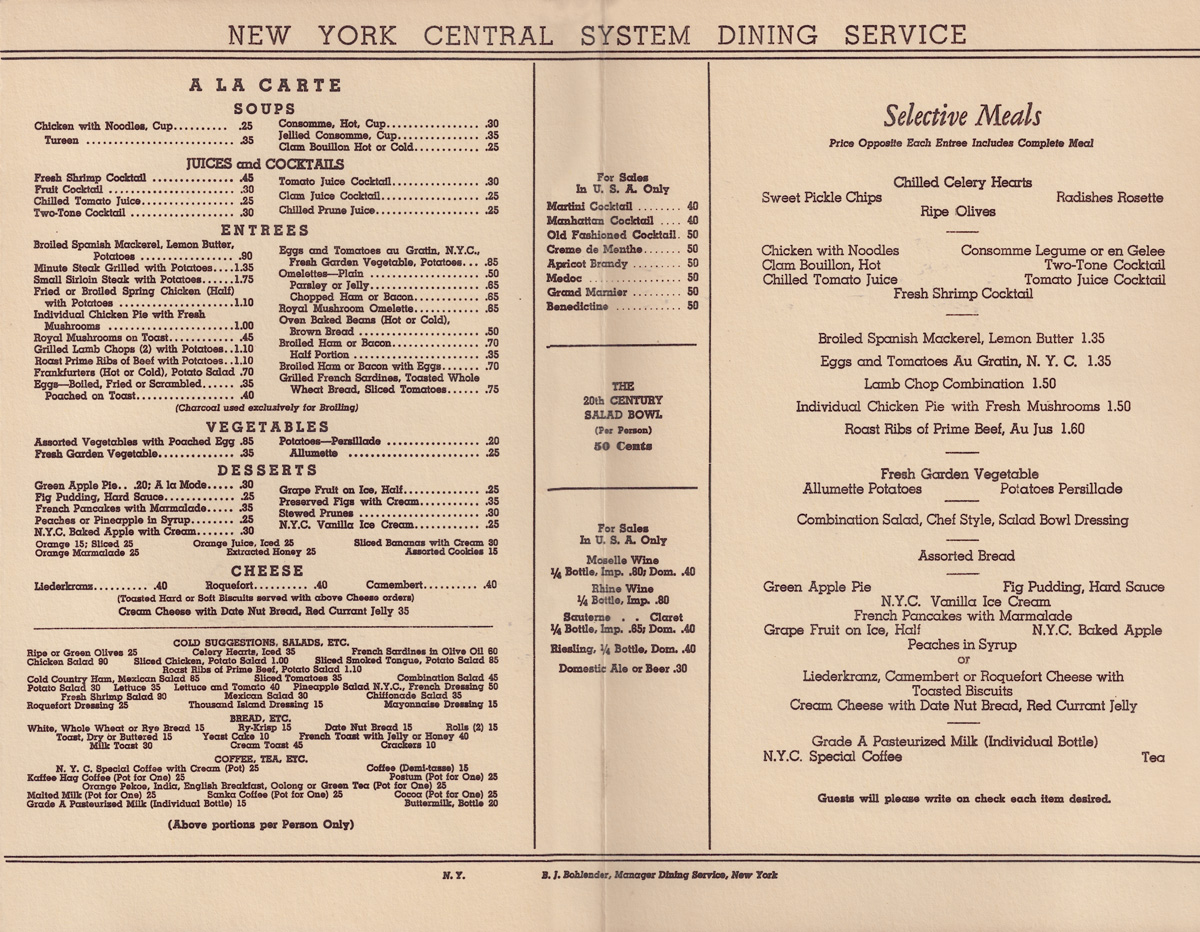
I LOVE THIS YOU CAN’T KNOW HOW MUCH. So much of the kinds of things they ate are like SO DIFFERENT than now, and I can just vaguely have some kind of long-distance-call telephoning to this in my own life, when you know, like, fruit cups with no fresh fruit in them and sort of eggs and noodles TOGETHER were still served! Like, NYC diners still served this food for a long long time afterwards and just the names of the dishes bring me right back there I mean the upside down cakes and the Stroganoffs, ffs. I think I posted at some point some of the real menus for the 20th century limited; so awesome. Thank you @steve-rogers-new-york!
Hello friend! Thank you so much, I’m glad you enjoy it :). My apologies for the delayed reply – I recently moved across country and it’s been a time dealing with all the real life stuff.
So first off, yay for Stucky Big Bang and yay for interfaith Barnes family! That’s the way I write them myself, so I didn’t have to research much to answer this question. Yay for all the Yiddish! Do you speak it?? That is super cool, and I am all for multilingual fics. I hope you will send me the link to your story once posted! I would love to read it.
Families immigrating to New York during the relevant time period (you’re most likely talking about direct or first generation immigrant families, as New York City saw its largest wave of immigration between the 1870s through 1924) were likely to spend their first few years in Manhattan, and then make for their respective ethnic enclaves in the outer boroughs (Brooklyn and Queens, primarily, but many made questionable life decisions and moved to Long Island and New Jersey). Jewish families mostly made that trip from the Lower East Side out to Brooklyn neighborhoods like Crown Heights (what was known in the 1930s as Eastern Parkway), Flatbush, Brownsville (probably more lower class than middle), or Williamsburg (definitely more religiously orthodox than secular).
As far as what their homes might have looked like, you’re looking at brownstones in Crown Heights and Flatbush, and tenements in Brownsville and Williamsburg. You can find links to relevant images and descriptions here, and more generally in my master meta post.
Please allow me to point you to some more specific resources! 1940s New York is one of my favorite websites, because it gives a great breakdown for what neighborhoods were called at the time, what they looked like, and the demographic breakdown block by block. To give you some context about how far that median rent could stretch, please check out this excellent meta post.
I have some light reading for you regarding Jewish enclaves, and Brownsville specifically. If you’re looking for some more in depth resources, I recently purchased Jews of Brooklyn and Brownsville: the Jewish Years myself (I can’t vouch 100%, as I haven’t had time to read through them entirely, but they are highly rated). Jews of Brooklyn is somewhat available as an ebook?
Hopefully this is helpful! If you have more questions or are wondering anything specifically, please let me know. If you’d like me to answer something privately, please say so in a message.
Thank you to @dancinbutterfly for the opportunity to clarify: being raised Jewish is not limited to neighborhoods, but very much does include religious traditions. It’s not limited to neighborhoods, food, clothes, etc. The cultural history of Brooklyn is very much tied to Jewish culture, and I welcome anyone reading this to reblog or comment to add their own information, suggestions, resources, etc.







 Tumblr Exodus