beatrice-otter:
It never fails. Every time we get a peek behind the curtain of the OTW
board, it turns out to be a new and exciting picture of a screwed-up
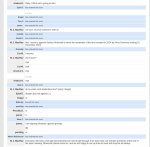
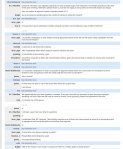
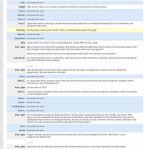
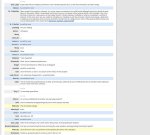
organization. The latest installment: current board members trolling
the OTW elections chats. (Official transcript. FFA thread on it. Tumblr post about it.)
The
screwed-up-ness of the board is, by the way, almost certainly why they
keep bleating about confidentiality in ways that prove they either don’t
actually know how it applies to the OTW or know but are lying to cover
their asses. See, the thing about non-profits is that they are supposed
to be transparent. Public financial records and minutes. The only
things things that should be confidential are
hiring/firing/promotion/other personnel issues. The default for a
non-profit is that EVERYTHING is a public record unless it falls into
one of a few very narrow categories (like personnel records). For the
OTW, I would imagine that certain aspects of ongoing legal cases might
also be confidential for the duration of the case, but that’s
specifically the legal/advocacy committee, not the work of the board
itself. But as long as they can keep things in-house–as long as they
can keep people from seeing, for example, board meeting minutes and chat
transcripts–they can do whatever they dang well please without having
to worry about being professional or getting called on petty bullshit
maneuverings.
I am pleased with the quality of candidates for the
current election. Given what we know of the OTW board’s inner
workings, here’s what I’m looking for in a candidate:
1) Never been
on the board before (because even board members who started out with
good intentions have, by this point, gotten sucked into the
dysfunctional system).
2) Experience with other non-profits (because dear God, do they need it).
3) Experience taking a dysfunctional part of the OTW system and getting it working (because they’ll need the experience).
Most
of the candidates meet all three of those, yay! Lots of good choice.
We get two people like that on the board, they’ve got a chance of
getting things turned around.
But that’s not a guarantee that
they can. I’ve talked about this before, but the thing is, any
organization or group that operates for a while settles into a system. A
pattern of behavior. It may be a great system, it may be a terrible
system, but the point is that everyone participates in it. Everyone has
their place. When someone leaves the system and someone new comes in,
everyone in the system generally works to try and fit the new person in
to the system and shove them into the spot left behind even if they don’t like the system.
I mean, even the people working to maintain the system may think it’s a
horrible system and they hate it, and they will still find all sorts of
justifications to try and keep it from changing. Why? Because it’s
comfortable, and they know their place. Change is hard and scary and
uncertain. People will often choose a bad system that they hate over
the possibility of changing to a better system, because they value
predictability. (When psychologists and sociologists study this, it’s
usually on a family level, which is why it’s called “family systems
theory” but it also applies to other sorts of groups-churches,
businesses, non-profits of all kinds, etc.)
This is why the last kerfluffle over OTW board elections, in 2011,
didn’t change much–one or two new people on the board isn’t going to
magically change the system. And if the rest of the board is really
determined to keep things going the way they have been, well, they can.
Even now, we get two awesome new people with lots of talent, drive, and
skills elected … and it’s quite possible for the rest of the board to
stonewall them and generally make their lives very unpleasant until
they either give up, go away, or get sucked into the madness themselves.
So
how do we change things? Electing good people is a start, but not the
end. We have to make sure that the board is accountable and STAYS
accountable. This means OTW members (anyone who donates $10 or more in a
year is a member) have to keep the pressure up. Keep asking
questions. Keep wanting to see the financials. Keep asking about
what’s going on inside the organization. Make sure they know that we
are watching, and that we want things run responsibly and according to
the best practices of non-profit organizations.
And the next time
seats are up for elections, we need to AGAIN make sure that we are
electing people with experience in non-profits who are willing to work
towards openness, accountability, and best practices.
It’s going to take a while, but it’s possible. IF we don’t do what we did back in 2011 and assume that getting someone elected means we won and everything will magically be fine now.
I was in the org for 15 months as a volunteer. In that time I went from brand new to a co-chair of a committee to leaving that committee and half joining a third to quitting. I say that in the spirit of transparency.
So, with that said I work for a non-profit in the brick and mortar world and was fortunate enough to watch 5 years of board meetings. The OTW board, when I was in the org, worked under such a heavy veil of secrecy, even from comm chairs that we never knew what was going on. Board chats would be public for a bit then go private with no transcripts or minutes. There was no budget but every request that impacted resources (money, drive or processor space) had to be board approved. Statements had to be run through multiple committees before they went public. Everything had to go past legal when there was at the time only one really active legal person.
The structure of the OTW was designed by academics from upper level universities and it shows. It is incredibly bureaucratic and labyrinth and I never got a good reason as to why. While I was with the org there was a board retreat to get the board all in one physical location which in theory is a brilliant idea! Except that at the same time we were unable to get the okay for money expenditures for things like server code support for weeks because ‘board’.
When I was there the strategic plan was in development and that was in the spring of 2013. There hasn’t been any kind of update I can find on the plan since September of 2014 and they started the darn thing in 2012. The scope of the plan was huge when I saw drafts of it but the volunteer base isn’t there to support it.
All of this is a very long way of saying that the problem is bigger than who is on the board. I made a recommendation then that what the OTW needed to do was one of three things: 1) Make the board advisory only and hire an executive team (no more than two) and pay them a small salary to run the org because running with a committee never works. 2) If you are keeping the current structure then the board needs to not be called a board but an executive committee with real job descriptions, deadlines and deliverables. When you don’t have those it is very easy to get caught in the morass of not knowing what to do next or if you are allowed to do so. 3) Hive off the AO3 project entirely and do some version of the first two suggestions. Something like 7 out of 10 people interested in joining the org are interested in the archive. Own that and do something about it. The other pieces of the OTW do great work but are dwarfed by the archive. The outreach, the legal work, Fanlore, and TWC are often subsumed by the needs of the archive which is a beloved but ravening monster.
In an ideal world we will get new board members that will do what they can to shift the culture in way that is sustainable and transparent. I have every hope that this will happen because I think ALL the work the OTW actually does is really good, they just don’t get to do it as often as they’d like from the weight of the system they are in. I look forward to the next few years and my hat is off to everyone that is able to be in the org and make it work. I dearly wish I could have.
 Tumblr Exodus