Seriously, this guy… this guy is full of advice for a writer who’s having trouble getting started.
He’s not writing, he’s painting, but… okay, like, he can sit there and talk about geology and the diffusion of light and make it clear that he knows what a mountain is and he knows what goes into the interplay of light and perspective, and then you’ll watch him smear some black paint on top of a still wet canvas with a thin metal wedge, and then take a brush and push it downwards so that it mixes with the base in such a way that it ends up lighter at the bottom and eventually just fades into the background.
And then he’ll take some titanium white paint and do the same thing to add snow and light, and you’re thinking… “But… interplay. Geology. Perspective.” and he’s just pushing paint around, talking about figuring out where the north slope lives and how there are no mistakes, just happy little accidents and then he steps back at the end and holy moly, it looks like he painted a mountain.
It doesn’t look like he pushed paint around for ten minutes, it looks like he looked at a real mountain somewhere and copied it.
Is there a real mountain that matches the painting? No. Could he use this method to exactly replicate an actual mountain? No. But he made a mountain that looks real enough, and even if he didn’t have 100% control over the final look of it, he conjured it out of his imagination.
This is the trick that more writers need to learn. It’s possible to create a story or even a whole book through meticulous planning and careful construction, but… most people can’t do that. It’s not that we’re not willing to put in the work, it’s just too easy to get stuck. Too easy to never leave the “Well, I’m still worldbuilding/researching” stage. Too easy to write oneself into a corner or get bogged down in the details.
So this is my advice today for fiction writers:
Learn how to speed paint.
Learn how to work wet on wet.
Learn how to push paint around on the edge of a knife.
Learn how to figure out where things want to live by feel and how to allow for happy little accidents.
There will be places for fine details and intricate sketches. But when you’re staring at a blank canvas and you have no idea where to start… paint the whole thing blue and start scraping up some mountains.
Quick, broad strokes. That’s all it takes to get you started. Quick, broad strokes and a few happy accidents.
Reblogging for myself.
Useful advice, especially this –
It’s possible to create a story or even a whole book through meticulous
planning and careful construction, but… most people can’t do that. It’s
not that we’re not willing to put in the work, it’s just too easy to get
stuck. Too easy to never leave the “Well, I’m still
worldbuilding/researching” stage. Too easy to write oneself into a
corner or get bogged down in the details.
Until you’ve created a sky and a landscape there’s no need to research the shape of leaves on trees, and even less need to find out how their veins wiggle. If something that minuscule is an important plot point – and if it’s too minuscule it’ll start to feel like a Deus ex Machina – come back to it later once the story is complete.
I speak from guilty rivet-counting experience here. Four carefully-researched chapters out of a projected fifteen Did Not Make A Finished Book – and perhaps never will, because I got so embroiled in tweaks and polishes that I literally lost the plot and spoke (or thought) theEight Deadly Words. Bad enough when a reader says them; if it’s the author, there’s a problem. That material is now in the “check this later maybe” folder that’s the Dropbox equivalent of shoved to the back of the drawer. At least it hasn’t been deleted. (Never Delete Anything.) Be warned by me.
(It’s why so many of my arms and armour (etc) posts have a slant towards use in writing, and why you’ll often see observations like “if specific – a 7.62mm Nagant revolver with a Bramit suppressor – isn’t vital, vague – a silenced handgun – works fine with less chance of error”.)
@dduane often uses and mentions C.J. Cherryh’s “ten-item-shopping-list” technique – ten sequential incidents to take a story from “Once upon a time” to “The End”, and ten smaller incidents inside each larger one to take a chapter from its start to its finish. That’s what will happen to he things at the back of the drawer when/if they come out again.
Given how many novels DD and CJ have written, it’s a technique worth noting even if outlines aren’t your thing.
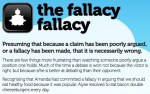
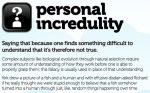
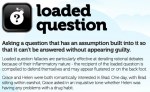
This graphic is fabulous. It represents a tiny crash course in rhetoric. Learn these things. Put them on your wall. Whisper them into the breeze. These are THINGS TO KNOW.
Yeesssssssssss.
Interesting
Bookmark this shit and the next time someone begins gobbling nonsense at you on a social network, instead of engaging, point them to this handy chart. Also useful: Thought Catalog’s “How To Have A Rational Conversation“ flowchart.
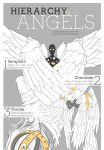
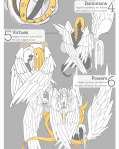
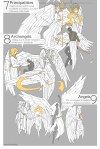
THE NINE CHOIRS OF HEAVEN. An info-graphic for my editorial class and god am I thankful it’s done. Way too much went into this than what I had time for, but hey… I actually kind of like it?
Now excuse me, I must return to my fashion major lifestyle and go sew a coat u_u
You should not know anything about this. The structure of heaven and the angelic organizational chart are privileged information. Anything the Angels have told you is a lie, as they also do not exist. Report any sightings to the Council immediately.
I’ve seen one list going around but it consists mainly of books, which may be time-consuming or unavailable for some folks, and our ability to share them far and wide is limited. I compiled this list of online articles available for free plus archive.org links. Check on the notes if you save this link as I may occasionally reblog it to add articles that fit.
“Ur-Fascism” by Umberto Eco[mirror link] – an essential description of what fascism looks like.
“No, We Won’t Calm Down” by Robothugs [mirror link] – how to avoid shutting out our marginalized allies, and how to recognize when someone is doing it to you
“On Arguing with the Upper Class” by The Coquette [mirror link] – why arguing with your friends on Facebook isn’t activism and it isn’t like what happened to Derek Black.
I skimmed through these (I’d read some of them before) so if you want a quick takeaway:
The White Flight of Derek Black is excellent reading if you feel like you need some hope.
Ur-Fascism provides a lot of historical context to modern fascism.
How to Help the Cause When You Need Help Yourself is a GREAT resource for people who feel like they can’t possibly do everything they want to, and who feel limited by disability, physical or neurological.
On Arguing with the Upper Class is a short, concise, useful single-punch if you feel like you can’t handle anything deep or long today.
The post on fascist tactics is for if you really want to get mad and start some shit.
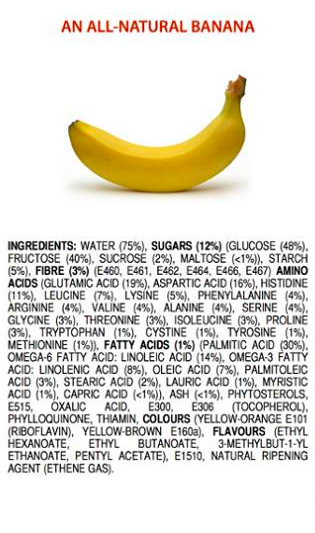
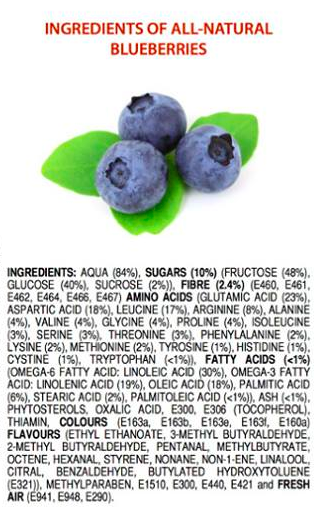
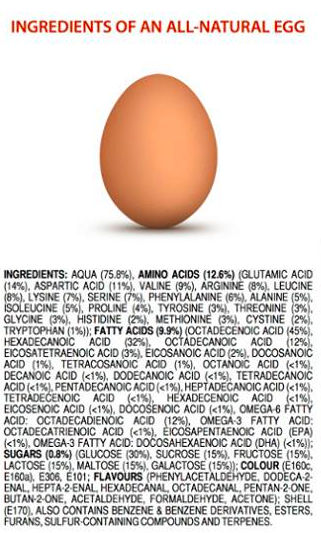
If you look at the ingredients list and it’s a bunch of words you don’t even know… neither does your body (x)
Just like if you break apples and grapefruit down into their chemical components, I’m willing to bet that most people wouldn’t recognize the “ingredients” either. It’s a bunch of words you don’t even know:
External image
Don’t use these scare tactics – Chemicals aren’t inherently bad. Literally everything is made up chemicals. Trust me, your body knows what niacin is. It knows how to digest fructose and calcium sulfate. Even if you only consume the most basic and “real” foods that are pulled directly off the vine, you’re still ingesting a series of chemical compounds that you probably can’t pronounce. That’s okay.
“If you can’t pronounce it, it’s bad for you” is literally the worst pseudo-scientific scaremongering bullshit tactic. I hate it so much.
I’m pretty sure you can pronounce “arsenic”, but that doesn’t change the fact that arsenic is highly toxic. On the other hand, you couldn’t pronounce “cycloadenosine monophosphate” or “nicotine-amide-dinucleotide-phosphate”, though both of them serve vital roles in human biochemistry and you would die if your body wouldn’t produce them.
Cyanide: Easy to pronounce, very bad for you.
Eicosapentaenoic acid: Difficult to pronounce, very good for you.
It’s more important to know what the chemicals are and why they’re in there. Anti-intellectualism helps no one.
I’m gonna keep reblogging this until my knuckles fall off.
This is especially hilarious because grapefruit is well known for being dangerous for some people because of how it can interact with certain medications. Do fruit loops do that?
You can click through and then blow up the image for a good reference for what was available and how much it cost back then. The Bowery was not, to put it gently, high end, so it’s suitable for your pre-movie needs…
Conceptual illustrator, Josh Nizzi (“Iron Man 3”), has update his website with some fantastic designs for Marvel’s Captain America: The Winter Soldier. Hit the jump to see concept art of Falcon/Sam Wilson and the Winter Soldier/Bucky Barnes.
This is pretty damn fantastic. Click the link to check out some early concept art for Falcon and the Winter Soldier in “Captain America: The Winter Soldier.”










 Tumblr Exodus