After the shooting Colorado, author Bryn Greenwood tweeted a list of the regular acts of violence, intimidation, arson and vandalism she experience while working at Planned Parenthood. This most troubling part of all? Her clinic didn’t provide the one thing attackers were mad about.
i’ve seen a lot of variations on this argument pass my dash ever since that cacw empire article came out, so i’m just gonna say it: it is not harder and better and somehow more purer to portray a platonic male friendship on screen than it is to make the relationship romantic. it’s not. the history of media is full of guys who love each other and would do anything for each other and then go home to their wives, because well obviously they’re not gay.
“romance is just an easy shorthand for intimacy and trust.”
please. please send these easy shorthand gay relationships my way. what universe do you live in that gay people can hook up easily on-screen and the audience reaction is “what a cop-out, they’re just doing it to avoid developing their friendship.”
listen. heterosexual romance is often an easy shorthand for intimacy and trust. this works because there’s an expectation – both on part of the filmmaker and the presumed audience – that heterosexual romance is normal and part of the background radiation of everyday life. and anyone makes a movie where the male and female leads hook up, without much build-up or development of their relationship, they then strengthen that expectation in a self-perpetuating feedback loop.
gay romance does not have the same cultural history. the default assumption is in fact that same-sex leads will not hook up unless they live in the gay/lesbian genre. platonic male friendship is, in fact, the easy way out.
it’s absolutely homophobic to say a gay romantic relationship would somehow lessen a bond of friendship. and i mean this in the kindest of ways, because it’s not the same kind of homophobia that leads to gay people being physically attacked, or laws being written to actively restrict people’s rights for the fact of being gay. it’s a low-grade, pervasive homophobia that results when the speaker doesn’t conceptualize gay people as a part of a normal, everyday milieu. that a character being gay has to be narratively justified in some way (as if gay people around the world don’t have to justify their right to exist every single day!); that a gay relationship is somehow “pandering” and “inorganic”, because the normal, natural – straight – audience could never really relate to a gay relationship.
look. we are all shaped by cultural expectations. it doesn’t make someone a bad person if their mental conception of “an intense relationship between two guys” defaults to “friendship” instead of “romance”. but responding to any challenges to that paradigm by extolling the virtues of same-sex friendship and ignoring the long history of gay relationships in media being censored and sanitized and othered? yeah. that’s homophobic.
Agreed. If it were really so “easy” to say they were lovers, it would have been done already.
The use of the word “brotherhood” as a counter to gay relationships has really started to bother me.
Brotherhood has become a more polished “no homo,” apparently to the point that two male characters can have a “love story” on screen and still be totally straight. They could say the characters are “just friends,” but they have to go all the way to “brothers” to make sure the relationship can be as emotional as they want with no gay repercussions. When I see this, I feel like it sets up a dichotomy of queer vs. familial, where “brotherly love” is held up as the safe, natural reading, and a queer reading becomes even more perverse by contrast.
I also hate when people will bring up the constraints men put on their friendships. “This is such an important depiction of male friendship. Men are never allowed to show this amount of love or vulnerability with their buddies.” The implication, of course, being that to turn it into a gay romance would be to cheapen it. That it’s more important to have yet another statement about the beauty of masculine friendship instead of queer representation. Look, buddy, it’s not my fault men won’t hug each other. And what’s this about them not being allowed? Men are absolutely allowed to hug each other, to be open and vulnerable and demonstrative with their friends. You know why they don’t? Because they’re afraid someone will think they’re gay. Because male friendship is acceptable and male romance isn’t.
When I explain cultural misappropriation to children, I use the example of The Nightmare Before Christmas.
It’s effective because especially for children, who don’t have enough historical context to understand much of the concept, you can still fully grasp the idea.
There was nothing wrong with Jack seeing the beauty and differences in Christmas town, it’s when he tried to take what is unique about Christmas town away from those it originally belonged to without understanding the full context of Christmas things is when everything went wrong.
When Jack tries to get the folk of Halloween town to make Christmas gifts for children, etc., children understand that the Halloween town folk do not have the full context for the objects they are making, and they are able to see that the direct repercussions and consequences are very harmful.
what i like about this is the implication that if jack had taken the time to understand christmas town, bringing christmas to halloween town would not have been harmful. that’s how it works, folks. cultural sharing is GOOD, it’s only misappropriation when it’s done in ignorance and disrespect.
So it’s not just accidentally removing things form their context; he has intentionally disregard the meaning of the rituals he purports to be recreating, making them more fun for the recreaters but not like what the rituals are supposed to be and without the related significance.
This is the best way to conceptualize the wrong way to share culture I have ever seen and I think I finally get where people are coming from when they talk about “cultural appropriation.”
This is an EXCELLENT explanation through example!
I’ve seen this post go around before and reblogged it, but this time, the distinction between “get it” and “have it” really jumped out at me.
I tried to argue that Ophelia resonated because Shakespeare had made an extraordinary discovery in writing her, though I had trouble articulating the nature of that discovery. I didn’t want to admit that it could be something as simple as recognizing that emotionally unstable teenage girls are human beings. …
When Ophelia appears onstage in Act IV, scene V, singing little songs and handing out imaginary flowers, she temporarily upsets the entire power dynamic of the Elsinore court. When I picture that scene, I always imagine Gertrude, Claudius, Laertes, and Horatio sharing a stunned look, all of them thinking the same thing: “We fucked up. We fucked up bad.” It might be the only moment of group self-awareness in the whole play. Not even the grossest old Victorian dinosaur of a critic tries to pretend that Ophelia is making a big deal out of nothing. Her madness and death is plainly the direct result of the alternating tyranny and neglect of the men in her life. She’s proof that adolescent girls don’t just go out of their minds for the fun of it. They’re driven there by people in their lives who should have known better.
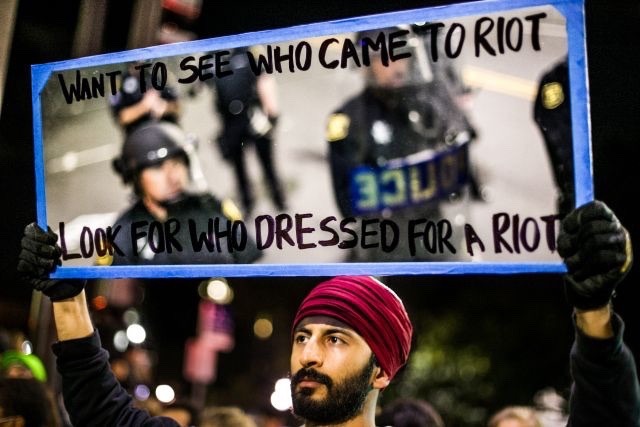
It’s Nick Randhawa! Had the great pleasure of knowing him at Berkeley. He’s done fantastic work.
Always reblog this
It’s back!
Finally a version with his name
Don’t you dare, for one minute,
believe that my kindness makes me
anything but insurmountable.
I did not unzip my chest to every kind of hurt,
and stagger back, wounded and alive,
just to hear you call me weak for trying.
If anyone slaps you on the right cheek, turn to them the other cheek also
Matt 5:39
This specifically refers to a hand striking the side of a person’s face, tells quite a different story when placed in it’s proper historical context. In Jesus’s time, striking someone of a lower class ( a servant) with the back of the hand was used to assert authority and dominance. If the persecuted person “turned the other cheek,” the discipliner was faced with a dilemma. The left hand was used for unclean purposes, so a back-hand strike on the opposite cheek would not be performed. Another alternative would be a slap with the open hand as a challenge or to punch the person, but this was seen as a statement of equality. Thus, by turning the other cheek the persecuted was in effect putting an end to the behavior or if the slapping continued the person would lawfully be deemed equal and have to be released as a servant/slave.
I can attest to the original poster’s comments. A few years back I took an intensive seminar on faith-based progressive activism, and we spent an entire unit discussing how many of Jesus’ instructions and stories were performative protests designed to shed light on and ridicule the oppressions of that time period as a way to emphasize the absurdity of the social hierarchy and give people the will and motivation to make changes for a more free and equal society.
For example, the next verse (Matthew 5:40) states “And if anyone wants to sue you and take your shirt, hand over your coat as well.” In that time period, men traditionally wore a shirt and a coat-like garment as their daily wear. To sue someone for their shirt was to put them in their place – suing was generally only performed to take care of outstanding debts, and to be sued for one’s shirt meant that the person was so destitute the only valuable thing they could repay with was their own clothing. However, many cultures at that time (including Hebrew peoples) had prohibitions bordering on taboo against public nudity, so for a sued man to surrender both his shirt and his coat was to turn the system on its head and symbolically state, in a very public forum, that “I have no money with which to repay this person, but they are so insistent on taking advantage of my poverty that I am leaving this hearing buck-ass naked. His greed is the cause of a shameful public spectacle.”
All of a sudden an action of power (suing someone for their shirt) becomes a powerful symbol of subversion and mockery, as the suing patron either accepts the coat (and therefore full responsibility as the cause of the other man’s shameful display) or desperately chases the protester around trying to return his clothes to him, making a fool of himself in front of his peers and the entire gathered community.
Additionally, the next verse (Matthew 5:41; “If anyone forces you to go one mile, go with them two miles.”) was a big middle finger to the Romans who had taken over Judea and were not seen as legitimate authority by the majority of the population there. Roman law stated that a centurion on the march could require a Jew (and possibly other civilians as well, although I don’t remember explicitly) to carry his pack at any time and for any reason for one mile along the road (and because of the importance of the Roman highway system in maintaining rule over the expansive empire, the roads tended to be very well ordered and marked), however he could not require any service beyond the next mile marker. For a Jewish civilian to carry a centurion’s pack for an entire second mile was a way to subvert the authority of the occupying forces. If the civilian wouldn’t give the pack back at the end of the first mile, the centurion would either have to forcibly take it back or report the civilian to his commanding officer (both of which would result in discipline being taken against the soldier for breaking Roman law) or wait until the civilian volunteered to return the pack, giving the Judean native implicit power over the occupying Roman and completely subverting the power structure of the Empire. Can you imagine how demoralizing that must have been for the highly ordered Roman armies that patrolled the region?
Jesus was a pacifist, but his teachings were in no way passive. There’s a reason he was practically considered a terrorist by the reigning powers, and it wasn’t because he healed the sick and fed the hungry.
Yes, and isn’t it telling that the state ultimately adopted Christianity and started teaching everyone that Jesus said to obey your parents and to just do what you’re told…else he’d send you to hell?
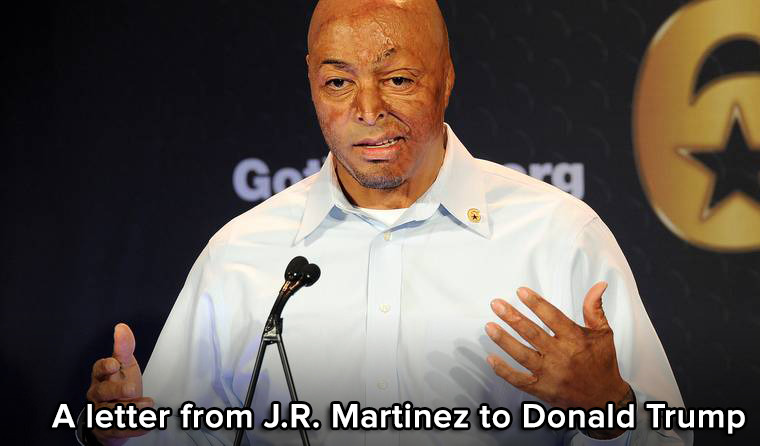
I’m a firm believer that politics should be kept out of our military and that our military should be kept out of politics. However, over the last week, a line was crossed not just between politics and our military but between personal ideology and human decency.
You recently told a crowd of your supporters, upon receiving a replica Purple Heart, that you’d, “always wanted to get the Purple Heart. This was much easier.”
Mr. Trump, I’m not a campaign manager. I can’t tell you how to run this race. But I say this as someone who knows you. I’ve met you before and you seemed as though you genuinely cared about my service and sacrifice. I wonder which version is the real you.
I am a proud post-9/11 U.S. Army veteran and Purple Heart recipient. When I first joined the military, like many other service members, I had dreams of serving valiantly and one day receiving many military accolades in service of our great nation.
In April 2003, the humvee I was driving outside of Karbala, Iraq, ran over a roadside bomb. The passengers were immediately ejected as a result of the blast, but I was trapped inside the burning vehicle for five minutes. I can tell you without equivocation that the one award I did not want to receive was a Purple Heart, but I got one anyway. And I’ll tell you now, I didn’t get mine the easy way.
I came home to my mother with third-degree burns over 33% of my body. I have had 30-plus surgeries to repair the skin grafts and tissue expanders since 2003. I came home a Purple Heart recipient, but my mother knew that we were only a few heartbeats away from giving her a new designation — a Gold Star.
So far you seem to have denigrated a prisoner of war, disparaged a four-star general who devoted his life to service, and disrespected the faith and the grief of a Gold Star family. Any one of these actions alone would otherwise disqualify a person auditioning for the role of our commander in chief.
I cannot understand why you have continually attempted to dishonor the memory of Army Captain Humayun Khan. You have repeatedly attempted to link him and his family to radical Islamic terrorism by even bringing their names up in the same sentence.
You say that you support our military, but your actions tell a different story. You assert that you have made sacrifices on par with the Khan family. I must ask you; do you truly understand the fundamental difference between investments and sacrifice?
Your reaction to his family’s emotional statement has shown me two things: First, you have a difficult time picking your battles. In the military, this is an important lesson that soldiers learn. You attended a military academy in your childhood and you are a businessman, so I know you understand this strategy.
If your response to this family had simply been to acknowledge their ultimate sacrifice and to say that as Americans, they are constitutionally entitled to their opinions, that would have been enough. You chose a different tactic. You chose to stay in the news cycle with your increasingly outrageous statements of condemnation of a family who, by all accounts, should absolutely be off limits.
How can we trust our military in the hands of a commander in chief who we can’t even trust to comfort the parents of a fallen soldier?
Second, your reaction also tells me that since you have difficulty dealing with the opinions of a private citizen of this country, you will almost certainly have a harder time in the world of global politics.
My 4-year-old daughter has a better sense of human empathy around this subject. When I take her to the park and other children stare at the scars that cover my face and arms, she takes my hand and encourages me to talk to those young children and explain why I look the way I look.
My hope is that your actions and words do not continue to erode our civil discourse. I pray that good people in this country continue to be shocked by your rhetoric because that means they agree that your words and actions have no place in society, much less in the Oval Office.
You have stated that all press is good press. It’s an interesting strategy that has thus far worked for you. But this, the memory of our fallen soldiers, their families, former POWs, and the proud recipients of the Purple Heart honor. This is not the position from which you should be getting your press. This is off-limits.
Please remember that the people you are speaking about, our brave men and women of the armed forces make up less than 1% of the population. However, if you become commander in chief, they will be the people who are going to fight for you regardless of personal politics. These are the people who will defend you. These are their families you are talking about. These are not the people you want to continue to carry out your petty grievances and personal attacks with.
I respectfully suggest you get a primer on the word sacrifice, as well as a lesson in human decency.
This might come as a surprise to some people, but Canada is not perfect. Some Canadians may want to say that not all cops are going to or even capable of harassing the public in the ways discussed above. “I know a good cop”, “my sister’s husband is a good cop”, “who do you think is going to help you if you’re a victim of a crime?”
What is important, however, is that nearly every Canadian law officer understands how our society works, and understands that they hold privilege of preferential treatment above the lawif they are to ever commit a violent or demoralizing act against another human being.
Canadian cops are treated like they embody the stereotype of the honest, polite Canadian that the worlds sees us as. But in reality, they are humans – and even sometimes, monsters.
ARCH Disability Law Centre’s submission to the Standing Committee on Justice Policy
on Bill 103, An Act to establish an Independent Police Review Director (this submission concerns both ARCH’s balliwick, accessibility concerns, and broader concerns about police accountability, as well as what ARCH sees as flaws in the Act)
I live in Toronto, and did some very limited activism around police accountability 15 years ago, which is why my awareness of this is focused on organizations like these.
You may also be interested in a little historical context as well: the LeSage Report was released in spring of 2005, as condemnation of police violence against protesters at big demonstrations faded (in no small part due to anti-war activism having leached energy from anti-globalization protests in the West, and in turn fading due to the increasing momentum of the War on Terror in Iraq and Afghanistan) from public discourse. However, it was still fresh enough that the public could recall easily enough the tear gas wafting into the sky above Quebec City in 2001, the young man shot to death by Italian police in Genoa, or the APEC protest in Vancouver in 1997 (see Nardwuar’s famous question to Prime Minister Jean Chretien about that and the PM’s infuriating response). Activists made public their research into the strong links between the actions of the police in these situations, and the actions of police regularly assaulting and terrorizing people of colour, the poor, sex workers, and First Nations members. The McGuinty government, confident in their 2003 mandate from Ontarians ending the Common Sense Revolution, were determined to address this issue. I think, given that Michael Bryant was the Attorney General at the time, they were more than just a smidgen earnest in this legislative act. (Bryant, for all his faults, seems to be a lower case liberal as well as a Liberal)
But 2005 was also the “Summer of the Gun” (see also Idil Burale’s Part II, and Spacing’s conclusion to the series) culminating in the Boxing Day shoot-out. Street gang violence had made headlines, and the government moved quickly to dramatically increase their efforts to combat it: the Toronto Anti-Violence Intervention Strategy, or TAVIS; hiring more police officers in Toronto (and later in other cities across the province); creating a Guns & Gangs Operations Centre; and increasing the number of Crown Attorneys, Judges, and other Justice staff. The focus of these efforts was and is on street gangs, organized crime, and outlaw motorcycle gangs, but it’s clear that the TAVIS raids and arrests of black and brown people in the Greater Toronto Area takes the spotlight. TAVIS, and TPS (Toronto Police Services) in general, “carded” a lot of black and brown people. Black and brown people have complained about TPS violencelong before BLMTO.
The Ontario government strode forth bravely to reduce the violence its armed agents create in the administration of justice, by acting on the LeSage report. However, the government undermined this by the increase of its policing of black and brown bodies in their anti-Guns & Gangs operations. I feel it’s critical to complement the reporting of individual police officers acting violently by providing a background of how the government goes about supporting, funding, and legislating police activities. It’s also important to note that this doesn’t happen in a vacuum, either; violent crime in racialized communities has an effect on policy, and concomitant police violence in those communities.















 Tumblr Exodus