ask around to see if your particular fandom has a similar organizer
talk to fandom friends, especially other writers. They might help or they could point you in the right direction
know what you’re looking for and put out a post seeking it.
Examples of that last point would be something like,
“I’m looking for a Spanish speaker, preferably from Argentina, to help me add some Spanish into my fic and give me some cultural insights.”
“I need some help wrangling my tenses on my latest fic. Is anyone able to help me out? I’m writing about [ship, fandom, etc]”
“Can anyone help? I’ve got a story that I want to set in London, but I’ve never been there.”
Does anyone else have some tips to share? Or examples of finding (or being) a beta?
-Mod Pi
If you’re a writer and you want to be a beta reader, please don’t do what I did when I first started beta reading.
When I was younger, I got started in literature as a writer. I had my own developing writing style and my own writing voice. I felt that this was the “right way” to write. Clearly, I was wrong!
I would beta read with the subconscious bias of trying to fix other people’s writing with my own writing style and writing voice, instead of looking out for stuff that’s actually helpful. Trying to force your own writing style and writing voice on someone else, especially a young or inexperienced writer who doesn’t have a full grasp on their voice and style yet, is very detrimental to their confidence and writing growth.
So here’s some stuff that’s actually helpful!
Reading and In-Story Stuff
1. Your first impressions, (both good and bad) especially of worlds or characters, and why. This helps with the writer being able to understand how readers see their characters.
2. What you liked about the world. This helps the writer understand what the readers connect with and enjoy, and what they relate too.
3. What you didn’t like, but because the story was immersive, not because the writing was bad; a character who made you genuinely angry and you want to kick him in the nuts or something, or a world flaw that makes sense and to actually go into the world and start helping the characters start riots. This helps the writer make sure that what’s meant to make readers angry, are actually making them angry.
Writing and Writerly Writing Stuff
1. Commentary on the pace of the story. Writers read their stories over and over and over, so most of us get blinded by how fast things are actually escalating, or how long the story seems to drag. A reader will be able to tell right away if things are just moving way to fast, or aren’t moving fast enough and things are boring.
2. Some of your favorite lines and word choice and why. Sometimes writers don’t actually notice the clever things that they say, and readers will find a more unexpected outlook on the story then the writer.
3. Clunky phrasing or awkward sounding sentences. Sometimes this can be dialogue, sometimes this can be transitioning paragraphs. This is never really particular word choice. Again, writers have been staring at their stories for hours for days on end, so we just get blind sighted by things that are obvious to other people.
Respectfulness and Considerations
1. DON’T fUCKING cOMmENT on THE sPELLiNG oR gRAMMaR. If a writer sends you a 3,894 word chapter with intense drama, 2 different plot twists, an important new character reveal and a major character death, and all the reader cares about is 4 different misspelled words and 3 grammatical mistakes… that’s annoying as all hell. Unless this story is going to be posted/published in the next 23 minutes and it needs super speedy proofreading with no comments whatsoever on the story itself, then okay, this is fine. Or if they directly ask you for grammar and spelling help (maybe because they’re not writing in their native language or if they don’t have a full grasp on all of the writing rules yet) then go ahead. But it’s disheartening most of the time and the story itself feels ignored.
2. If you come across a paragraph that’s just not doing it for you, stop and consider for a few moments as to why. Try and figure out what the issue is first, and if you can’t, ask for clarification as to what’s going on. And then add your critique. Try to explain why it’s not sitting right with you, not just giving an example as to how you’d re-write it.
3. Not all writers are the same and not all writers are looking for the same things. It helps to ask. Ask ask ask ask. Ask them what they’re looking for, what they want help with, and what they expect from you as the first reader of their story. Some might want brutally honest and vicious critique where you rip their story down sentence by sentence. Some writers might actually hate this with a flaming passion and won’t want this at all, and would actually much prefer more positive, gentle, encouraging feedback.
————-
For writers looking for beta readers, especially from other writers, please be mindful of the time you’re requesting from strangers. If someone you’ve never met before went up to you in Starbucks and asked you to read their unpublished novel, or listen to their mixtape, would you?
In my experience, It’s always much much easier to reach out first and offer to read or review someone else’s work. Not once, not twice, but several times. You get back what you give, and this applies with time and attention as well.
Building a genuine relationship first helps a ton. Build up trust with other writers, and become a regular reader of their work. Get in touch with other fanfic writers in your fandom, or get in touch with other writers in your genre. Read tons of fanfic and stories, and leave genuine reviews in the comments.
That’s all the advice that I can give right now, but hopefully it helps.
I wanted to type up a little rundown of quick n dirty writing tips based on things I see a lot in fic/ amateur original manuscripts, and, uh, it turned out that they all revolved around POV. Nailing point of view in fiction writing is both crucial and one of the least intuitive building blocks of writing to learn: an understanding of POV has been the only useful thing i took from my college creative writing classes, and god knows how long I’d have stumbled along without it otherwise.
So! I am saving you, baby writer, the trouble of slogging through a miserable writing class with a professor who’s bitter as FUCK that genre fiction sells better than his “sad white man drinking” lit fic novels. Here are some assorted writing tips/ common mistakes and how to fix them, as relating to POV:
(this turned into a WALL OF TEXT so i will be using gifs to break it up)
>“I watched the ship tilt” “he saw the sky darken” “she noticed flowers growing on the rusted gate.” no. If the character who felt/saw/noticed etc is your POV character, whether in first or third, then this is called filtering and it takes the reader out of the story by subtly reminding them of the separation between the POV character and themselves. in most styles of writing, this is bad, not to mention it unnecessarily complicates your prose. try again: “the ship tilted.” “the sky darkened.” “flowers grew on the rusted gate.” Readers will instinctively understand that the POV character is witnessing the story happen, they don’t need to be told it.
I’m not telling you to never refer to your character “watching” something, of course: “I watched the birds dart around for hours,” isn’t filtering because watching is a notable activity, here, rather than an unnecessary obfuscation of the “real” thing happening. But understand how phrasing can jar readers momentarily apart from the character viewpoint, and use it with intention.
> Close Third Person POV still requires you to be mindful of your POV character. this is a rookie mistake i see allllllll the time. “Josh cried stupid tears at the beautiful display by the dancers,” is a sentence in Josh’s POV. “Stupid” tells us how he feels about the tears, “beautiful” tells us how he feels about the display. ok. all good so far. BUT.
“Josh cried stupid tears at the beautiful display by the dancers. It was everything he’d wanted from this production, from the lighting to the costumes to the exquisite choreography. Martha had to suppress a fond smile at his reaction; he was always so sweetly emotional after the curtain fell.”
Do you see what’s wrong with this paragraph? The first two sentences are Josh’s POV, and then the third one suddenly becomes Martha’s. A lot of amateur writers don’t even realize they’re doing this, which in its most egregious form is called “head-hopping,” but it’s disorienting and distracting for the reader, and makes it harder to connect with a single character. In multi-person close 3rd POV story, the POV should remain the same for an entire chapter (or at least, for an entire scene/ segment,) and change only between them. If you’re new to POV wrangling, watch your adjectives/ interiority (we’ll get to that in a second) and think “which character am I using as a lens right now, and am I being consistent" every once in a while until you get the hang of it.
> Related: let’s talk about interiority. Interiority is a more sophisticated way of thinking of a character’s “internal narration,” IE bits of prose whose job is not to advance the plot, set tone, or describe anything, (although it CAN do any of those things as well, and good prose will multitask) but to give us a specific sense of the character’s internal life, including backstory, likes, dislikes, fears, wants, and personality. In the above example paragraph, the middle sentence “It was everything he’d wanted from this production, from the lighting to the costumes to the exquisite choreography” Is interiority for Josh. It tells us that not only did he love the show, he’s very familiar with this art form and thus had expectations going in; likewise, listing the technical components is a way of emphasizing his enthusiasm while pointing out that it’s informed, implying that Josh himself is intellectually breaking down the performance even in appreciation.
“That’s a lot for a throwaway sentence you made up for an example.” Well, yeah, a little interiority goes a long way. Interiority is what creates the closeness we have to POV characters, the reason we understand them better than the non-POV characters they interact with. It’s particularly key in the first couple chapters of an original work, when we need to be sold on the character and understand the context they operate in.
If readers are having trouble connecting to or understanding the motivations of your character, you might need more interiority; if your story’s plot is agonizingly slow-moving (and you don’t want it to be) or your character is coming off as melodramatic, you might need less. It’s not something you should necessarily worry about; your amount of interiority in a WIP is probably fine, but being able to recognize it for what it is will help you be more mindful when you edit.
(Fanfic as a medium revels in interiority: that’s how you get 10k fics where nothing happens but two characters lying in bed talking and having Feelings. Or coffeeshop AUs that have literally no plot to speak of but are 100k+ long.)
>try not to describe the facial expression of a POV character, even in third person. rather like filtering, it turns us into a spectator of the character when they’re supposed to be our vessel, and since it’s *their* POV, there should be other ways available to communicate their emotion/ reactions. There are ways of circumventing this, (the example sentence where “Martha had to suppress a fond smile” is an example) where their expression is tied up in a physical action, or something done very deliberately by the character and therefore becomes something they would note to themselves, but generally, get rid of “[pov character’s] eye’s widened” and “[pov character] smiled.”
so that’s what i got! go forth and write with beautifully deliberate use of POV.
The key to this is research, in my opinion. All kinds of useful research you can get.
There are forums on the net where I’m sure a lot of people would be willing to answer any questions you might have. People usually like to talk about their experiences. Google “deaf forums” or “deaf community” for a good place to start.
Deaf In Literature (The following bibliography includes: novels; short stories; poetry; young adult and children’s books; plays; criticism and anthologies; biographies and autobiographies by and about people who are deaf. All of them may be found in theRIT Library.)
If you have more, feel free to reply or send them to me!
Overall, I think being deaf should not be the only thing your character has or is. There’s always more to people than just their disabilities or problems. People adapt, they don’t let that one thing define them. I personally like the idea of interviewing people willing to answer any doubts you might have, because in the end they know better what it’s like. Also reading good stories on the matter, and overall, learning all you can.
Stop thinking: “I’m not talented enough to execute this concept.” Start thinking: “I’m going to be a stronger artist when I’ve finished this piece.”
This is a fixed mindset vs. a growth mindset.
Your abilities are not static, and any challenges you have, anything that turns out different from how you imagined, is not evidence of failure, just a struggle towards improvement.
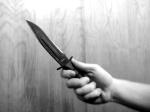
Forward Knife Grip Technique: Hammer
Forward Knife Grip Technique: Saber
Forward Knife Grip Technique: Modified Saber
Forward Knife Grip Technique: Filipino (Thumb on Spine)
Reverse Knife Grip Technique: Edge Out (RGEO)
Reverse Knife Grip Technique: Edge In (RGEI)
Unusual Knife Grip Technique: Forward Grip Edge Up (FGEU)
1] A grip is considered forward when the blade opposes the little finger. The Hammer grip, also called forward, this is the predominant grip technique. The fingers are wrapped around and under the belly of the handle, and the thumb is wrapped around the handle and in contact with the forefinger. The knife assumes a blade point angled up position when the wrist is locked and square.
The traditional grip technique’s main advantage is reach and some say finesse. The knife blade is held away from the body, and with an extended arm can deliver slashing cuts at the greatest distance. Because it is traditional, it feels the most comfortable to most people. It is the way most knife and other tool handles are oriented, and lends itself best to cutting and sawing chores in front of the knife owner. Because of the location, the knife and its work (or enemy) are easy to see. Notice that the knife is always at an up point angle, because of the natural orientation of the wrist.
The disadvantages are that the knife is far away from the body, therefore the hand is vulnerable and easily trapped or injured by an opponent or enemy. Also, less force can be applied the farther the hand is from the body and the more the arm is extended. The wrist must usually be canted (tilted) forward for the blade to remain straight or horizontal and aimed at the enemy. This can be unnatural and hard on the joints at the wrist, preventing the knife user from locking his wrists such as in a square-fisted punch. Enemies behind and beside may be hard to reach with the blade. Locking the wrist square in a punching position directs the knife point straight up or toward the user, not the opponent, particularly since the elbow folds inward, and can bringing the knife point directly into the knife user’s head and chest area.
2] A grip is considered forward when the blade opposes the little finger. Another variation of the traditional forward grip technique is the Saber; to have the thumb on top of the spine of the knife, or at the quillon or thumb rise. The saber grip will allow the hand to apply pressure with the thumb, which is very strong in the human hand.. In cutting chores, rather than tactical or combat use, this position allows good control and reach. In tactical use, it has similar advantages as the hammer (above).
The obvious disadvantage of this gripping technique is that the hand has a noticeable opening between the thumb and the forefinger and middle finger, so the grip is not as certain and secure as it would be if the hand was completely closed. It can help somewhat if the handle shape has substantial front and rear quillions to help secure the hand in the knife handle.
3] A grip is considered forward when the blade opposes the little finger. The modified saber grip technique is the same as a hammer grip, but in the modified saber grip, the thumb is placed on the side of the blade. The advantage here is the same as the hammer, in that the grip is very strong, and it is stronger than the traditional saber grip technique as more of the hand (the thumb) is actually wrapped around the knife generally. The modified saber grip also forces the hand to naturally orient the knife in a horizontal or slashing position if the hand is held in traditional square-fist orientation: the strongest, locked wrist punching position of martial arts.
The disadvantages to this technique of knife grip tactic are several. The thumb is positioned on the side of the blade, precariously near the cutting edges. A few jostles of the hand and the thumb could slide down to the cutting edge ( or serrations in other models) and be badly injured by the user’s own knife. Another disadvantage is that cutting outward can not happen in this grip technique unless the knife is double edged, and even then, the musculature of the human arm has limited strength in a backhand motion unless the knife user is a well-trained tennis player!
4] A grip is considered forward when the blade opposes the little finger. The Filipino grip is a forward grip technique where the thumb is not wrapped around the knife handle, like the hammer grip or along the back of the handle like the saber grip or along the side of the blade like the modified saber grip, but along the spine of the knife back. The idea is that the thumb guides, aims, and applies pressure to the spine of the knife, thus is able to increase pressure at the point of the knife blade. In effect, the blade can serve as an extension of the thumb, and for some it seems more natural.
The problems are several with this type of grip technique. First, it is probably better served on a small knife where the thumb extension feeling and association is more compact and reasonable. On a smaller knife, it can be a more comfortable and secure grip technique, but on a larger, heavier, and longer-bladed combat tactical knife, the thumb on spine is unwieldy and even uncomfortable. This is because it is unnatural for the thumb to be hyper-extended in a thumbs-up position, and the extension can mean that the thumb itself and its musculature and tendons are not protected and are subject to injury. Imagine a heavy strike applied to the main cutting edge of the knife in the photo. The thumb would be forced back toward the wrist, straining it, let alone my knife having a guard leaving a strain on my thumb. There is a reason that most martial arts systems teach a locked-wrist technique of impacts, and that is to protect this complicated wrist-hand-thumb joint. The second issue is that with the thumb extended, the motion of the forearm is more restricted. If you don’t believe this try this simple exercise: with your hand closed in a fist, extend and rotate your right hand counterclockwise, until your thumb is on the outside of your body axis. The rotation is unencumbered in most people, and the rotation can continue all the way to the shoulder. Now try the same movement with your thumb extended such as in this grip. You might be surprised to discover that your rotational movement is significantly restricted! The same limitations occur in an opposite rotation with the elbow being forced to fold against the body to achieve the same rotational degree. The fact holds that with the thumb extended, motion is restricted and the thumb is more vulnerable.
I’m not claiming that this grip technique does not have its place, on small knives in close quarters combat. But for larger knives, it’s probably not the best grip technique.
5] A grip is considered reversed when the blade opposes the thumb. The reverse grip then positions the blade pointing downward in the locked fist position. Edge out means the cutting edge of a single-edged knife is oriented away from the body. This is a traditional reverse grip, because the handle orientation of most knives can accommodate either the traditional forward grip or reverse grip with the palm of the hand in the same location on the handle, along the spine. So, of the reverse grip techniques, this is the most frequently accommodated and the most comfortable for most knife handles.
The advantages to the Reverse Edge Out grip technique are many. First, unless the elbow is extended and locked straight, the blade cutting edge always faces the enemy, no matter where the hand is located (unless it’s behind the knife user!). When the fist moves as in a cross punch, the blade and cutting edge can be raked across the enemy in a slashing motion. Second, like an ice pick, tremendous force can be brought to bear on the point, not only when oriented downward, but when an enemy is behind or beside. Third, the grip technique allows capping where the thumb (and thus force) is brought to bear on the butt of the knife handle. This also increases the security of the knife grip. A fourth advantage of this grip technique is that the knife can be oriented with cutting edge to enemy even when guarding with the forearm. A fifth advantage is that the “elbows bent” position that is usually assumed with this type of grip technique can be more powerful and defensive than an extended and reaching forearm, which is unprotected and may be easily trapped and fractured.
One of the disadvantages of this grip technique is limited reach. Because the point and edge can not be extended like a forward grip technique, the enemy must be handled at a closer range. A second issue is that deep thrusting moves can usually only be made downward or sideways, not frontally, unless the knife user is on top of her enemy. A third issue is one of trapping; that since the knife is closer to the body, the knife and arm can be pinned with a foot, object, or enemy’s hand. Of course, the object pinning the knife is subject to serious damage from the knife, and certainly a bare hand will not be able to maintain pinning without being cut.
6] A knife is considered held in reverse grip when the point opposes the thumb. This variation of the reverse grip technique is called Edge In, because the cutting edge faces the knife user. The individual knife handle shape is a huge factor in determining how a knife can be comfortably and securely held.
The advantages of this grip technique are similar to the advantages of the Reverse Grip Edge Out (RGEO) technique above, in that great force can be brought downward on the point of the knife blade. The movement is a clawing one, which some knife users are comfortable with. Enemies at the side and back can be vulnerable to this grip technique also.
The disadvantages are distinctly different. Having the cutting edge facing inward puts the movement of the knife blade toward the knife user. Cutting toward oneself with a 5” long bladed knife is never a good idea. The motion of thrusting is downward and inward, pulling the enemy closer into the knife user’s body. If the knife user is trapped or a strike lands on the knife, it can be injurious to the knife owner.
This technique and style is widely promoted with the claim that the it is the only Reverse Grip technique that can be damaging, as the knife edge can cut as it’s pulled in and down. This is only part of the picture. Knife slashes are less fatal than stabbing, piercing, or thrusting; the ancient Roman proved that.
7]The Forward Grip Edge Up technique has the knife handle spine cradled in the fingers, with the thumb either on the quillon or wrapped around the knife handle. A hunter may often use this grip when skinning hanging game and cutting upward.
This grip technique has its advantage in upward thrusts. Cutting upward is the main reason for this technique, and typically, the handle shape of the knife plays a large role in whether this technique can be comfortably used.
A distinct disadvantage is that if the knife is struck or parried, the impact could drive the blade’s cutting edge into the face or neck of the knife user.
Tumblr: Teaching us how to properly hold a knife for the next time we have to stab someone.
This is so important.
more like tumblr providing artists with amazing references oh god bless you
Reblogging because I know I have a scene where my character gets stabbed in the sternum and I will need to revise it someday.
fic writers i promise you–on my life–that readers remember that finn’s skin is dark brown.
i promise that if you use a descriptor besides “the darker skinned man” in relation to all the characters around him, people will know who he is in your sentence.
e.g. the sun’s golden rays made his dark amber skin glow as it slid lower in the sky.
e.g. the harsh white light surrounding his body roughened the soft lines of his face and made his skin appear greyish as though he were a wraith.
e.g. the only imperfection marring his skin was the raised brown scar that slashed jaggedly across his back. (finn’s skin’s rich with melanin, so even if his fresh scar’s initially raw and pink, eventually it’ll heal to a brown shade–either slightly lighter, same tone, or slightly darker)
i promise that you can describe him as you do rey or poe and your readers won’t forget that it’s finn you’re talking about.
i promise you, you can describe poe without making him sound like a white dude.
n.k. jemisin’s a master at writing her characters, who are predominantly people of colour. for this reason, she usually describes them in relation to each other and doesn’t rely on their skin tones. she explicitly describes her white characters’ skin tones to flip the dominant perspective that assumes white as default. here are some of her tips:
describing characters of color pt. 2(some of her rowling thoughts are ehhh, because rowling does otherise her characters of colour, but this is an old post)
i’m not a fan of buckling down and forcing myself to do stuff tbh so hopefully i can be kinda helpful here.
things to do when you can’t write:
make a pinterest board inspired by the story. sometimes seeing lots of pretty colors and visuals helps encourage me to put words along with them.
make a spotify mix inspired by the story. see above, but with lyrics.
this involves some pre-work, but i keep a google doc of writing prompts. sometimes if i can’t write the story i’m working on, i pick out a prompt and start drafting it just to keep my brain moving.
reread what i’ve written so far. sometimes it helps me gain enough momentum to write a few more words, which snowball into even more. sometimes i also print a story out and mark all over it with colored pens and highlighters to feel more productive and look at pretty colors.
go for a walk or stand outside a while (this one is donated by @celestialdisturbances but i also do this sometimes, usually while listening to the mix i made)
read/watch something that inspired you in the past that you haven’t revisited in a while. my go-to is Allen Ginsberg’s “Howl”, which i read aloud to myself in its entirety
make a bullet-point list of everything that has happened so far in the story. sometimes i try to make it fit into different plot structure forms to see how solid it is, and sometimes filling in blanks of established structures helps me figure out where to go next.
take a nap!! this one is the most important. sometimes the reason i can’t write is because i’m exhausted and i get mad at myself for not having infinite amounts of mental energy. so i lie down and think and think and think and doze.
if you can’t sleep, just lie down somewhere – maybe a place you don’t normally lie, like under a table, or in the grass, or somewhere where the view is different than you’re used to and that might be mildly uncomfortable. your creative energy likes it when you are mildly uncomfortable; i highly encourage seeking it out.
remind myself that i’m allowed to quit. sometimes giving myself an out is enough to re-establish that what i’m doing isn’t compulsory, that i’m doing it because i want to, and if i decide i don’t want to, i can stop. there is too much stigma around quitting things. i am very pro-quitting. do the things that keep your interest, throw everything else out. what you’re left with is the stuff you know you should fight for.
I think if you get quiet and honest with yourself–really honest, the kind of honest you need to get to your best work–you know when you’re stalling. You know when you’re working, when you’re bored, when scared, when you’re lost, when you’re stuck and when you’re stalling. It’s remembering to have that gut check and act on it that’s hard.
You working? Building something, losing a sense of time passing as you engage with your characters? Great. Keep going. Remember to take breaks and whenever possible stop when you still know what comes next.
You bored? Tough shit. If it was always fun everybody could do it. Take a short break and get your ass back in your chair. If you really need to, connect with the WHY–why are you doing this? If you can’t answer that, you’re sunk.
You scared? That’s normal. Keep going. Writing is telling truth by telling lies. It isn’t safe; it’s scary. But bravery isn’t defined by a lack of fear, it’s definied by what we do in the face of our fears. Be brave. You have it in you.
You lost? Get up. Go for a walk, take a drive, take a shower. Call somebody and talk the problem through. This IS the discipline of writing.
You stalling? You’re scared or bored or lost. See above.
the amazing Kelly Sue DeConnick, answering a letter asking “How can I stop doing stuff that isn’t writing?” in Bitch Planet Issue #8. (via sbyzmcpherson)
so Shire-talk is canonically a very different dialect of Westron than what Gondorians or Elves or whatever speak and some of the hobbits can code switch between the two and it’s extremely interesting to see how Tolkien portrays it
I’ve just gotten to the part where Frodo meets Faramir, and the difference between how he talks to Faramir and how he talks to Sam, for instance, is v noticable
with Sam he’s a lot more casual and even slightly more modern (for the value of 1954, not 2017) vs with Faramir where he switches to this very formal, quite archaic to our ears (“seven companions we had”)
and then Sam himself doesn’t seem comfortable speaking this prestige dialect (his style includes rather more general “vernacular” features common across regional nonliterary English dialects) – probably bc unlike Frodo he was not given the type of education that would lend itself to learning how to speak it comfortably – so there’s this clash between how Faramir talks to them and how Sam talks back
there’s also the bit where Theoden meets Merry and Pippin, and Merry greets him in very high formality, Pippin addresses Gimli casually bc they’re friends, then turns to Theoden and switches to the formal style, they both talk some more to him, and then after he’s gone Pippin turns to Merry and says Theoden was a “fine old fellow, very polite” (in the more casual style)
In that one scene you have a lot of style switching depending on the person they’re addressing and their status and relationship to the hobbits, but, for instance, Gimli’s sentence structure sounds more like the formal dialect even when he’s happily berating them and calling them villains, probably because he doesn’t use Shire-talk
@pinkpurlknitsnerdout, this is fascinating. I’ve never really thought to actively look for code-switching in literature, and while I’ve definitely noticed it in historical novels, I think all my experiences with high fantasy were before I even understood what code-switching was.
This is very interesting to me, as it’s something that I think I’ve always been very sensitive to in reading fiction. I suspect anyone born and educated in Scotland is predisposed to be so. Because the everyday language we speak in Scotland is so different to what we hear as soon as we start to listen to the radio and watch TV or as soon as we attend primary school (at around age 5), code-switching is something we start to learn very young and are further trained in the further we progress in education. I first encountered people – usually from southern England – who simply could not understand me if I just spoke naturally, the way I would at home, when I went to university at age 18, but of course by then I also knew how to speak. almost effortlessly, an English they could understand. Awareness of and sensitivity to code-switching is probably second nature to any speakers of strong regional dialects, not just Scots but likely Irish, Welsh, Geordies, etc too. For someone like Tolkien, however, it would definitely not be second nature or built into his upbringing and early education; rather he would have had to learn and develop it later on, deliberately.
(For anyone who’s interested, here’s an example of my hometown accent, or as near as makes no difference – the interviewees in that recording, but not the interviewer, who’s from a different part of Scotland. My natural accent is probably a wee bit “posher” than theirs, because my parents both came from wealthy, educated backgrounds and were schoolteachers, but at school and among my peers I quickly learned to broaden my accent a bit because it’s definitely not a good idea to sound “posh” or “well spoken” at a Scottish state school – heh, so again with the code-switching.)
This fandom is full of realistic, heart-rending, emotionally engaging, anatomically and physiologically correct and hot as fuck explicit gay smut. And prior to the 1st of January 2018, I had written NONE of it.
As a doctor and a married person, sex as a concept doesn’t alarm me. During my time as a medical student and GP and a locum A&E doc, I had the privilege of getting up close and personal to plenty of male genitalia, including prostates. But, writing about it just seemed… very hard. Pun intended. Not that I have lost my virginity in that sense, I thought I’d share some experiences. Yes, there was some sex in On the Rack, but the could have actually gotten away with a mature rating. Now, for the upcoming next part of You Go To My Head, I found myself teaming up with @7-percent to go all in (pun intended).
This sure as hell ain’t some presumptuous guide on how to write smut. I will probably never be qualified to give anyone advice on that. At most, these are some lessons I have learned while attempting to call up the fresh porns truck for the first time.
Problem one: how does one make hydraulics interesting? All this has been done so many times, and let’s face it – there are only so many ways to put tab A into slot B. Or rubs two tabs A together. Or suck on tab A while — you probably get my point already.
Problem two: how does one stop blushing at all the lurid details like a stupid teenager?
Problem three: how does one stop fearing that their mother and their colleagues will read this stuff and laugh?
Problem four: with so much great smut in this fandom, how will I ever pluck up the courage to serve up mine?
Solution to problem one: for me, this was realising that a sex scene should be looked at just like any other scene. What do I want to say with this, what plotty or emotional arc-related purpose does it serve, what will the general tone be, how do the logistics work? There can be dialogue, and the emotional stuff can actually be enhanced by the characters engaging in something so intimate. In a regular conversation in a story, I sometimes struggle to come up with things that the characters might be doing in between or while talking. Sex adds a big list of new alternatives. Sex has also turned out to be a veritable smorgasbord for serving up miscommunication, awkwardness and insecurity – some of the staples of my Sherlock characterisation.
Solution to problem two: team up with someone who is less cringey than you. A graceful, mature adult person (stop laughing at that description, @7-percent!) with whom you are comfortable discussing all the logistics of the hydraulics – and admitting when the blushes are hitting you. Well, mature and graceful are maybe less important than being comfortable in each other’s (online) company, and having fun. I don’t think I’m the sort to be able to have sex with a stranger, and I sure as hell couldn’t write about it with one. In the words of co-author mine: “We will manage. Just like these two idiots.”
Also, I think it helps to have read a lot of well-written porny goodness. Lots and lots of it, to see what I like and what I don’t. There are certain words and phrases that instantly put me off, so it was nice getting to dictate what goes in this time (pun obviously intended). Among other things, copiously leaking cocks make me want to scream. Cocks do not rival vaginas in their ability to lubricate the proceedings. Where do all these damned tropes come from?
Solution to problem three: sex won’t be the weirdest thing I have written, and all that messed-up stuff is already out there, so alea iacta est. Besides, to get to the smutty bits in stories that carry my name, people will have to wade through tons and tons of angst; no one in their right mind would summarise my fic career as as simply as “she writes gay porn”. And, if someone is really so very bothered by the notion of consensual sex between two people in a committed relationship, there is something wrong with them.
Also, I have been trying to practice what I preach being utterly shameless when discussing my recent porninations with fandomy friends. Keeping that attitude up is a challenge. I still vacillate between a smug, empowered sense of awesomeness and OMGWHATHAVEIGONEANDDONE. One thing that helped was getting a bit competitive with co-author mine. I refused to lose to her in terms of who dares and doesn’t dare to put in the necessary explicit details.
It surprised me, how much fun it all turned out to be. It made me stop feeling like a Sunday school teacher among all these other folks penning beautiful, romantic sex. It put me in a good mood, and offered refreshingly novel situations to write dialogue in.
Solution to problem four: how does one ever pluck up the courage to post anything? One simply does, and hopes that the reaction will be good. That’s all. When one has a track record of folks liking what one does, it’s much easier than being a newbie posting their first fic, whether that fic be explicit or not.
It’s odd what one acclimatises to. The percentage of Sherlock fic that is explicit easily goes over the proportion of explicit stuff in original, published literature, and most definitely also trumps it in, well, explicitness. After several years of reading these fics, it all feels rather normal – and so it should be. Sex and death are the two great forces of the universe, so why should we not explore them in detail? I’ve sure done the death bit already in my own writing.
There will never be a PWP with “J. Baillier” as the author. But, at least I no longer have to grumble quietly in my cave about never quite getting over that one little hurdle of not shutting Sherlock & John’s bedroom door in my readers’ faces just as things are getting interesting.
My co-authoress keeps taking me by surprise with her tumblr posts. But then she does that too when we are writing, too. We were both a tad tentative in On The Rack when it came to the sex scenes. And yet, the story of established JohnLock relationship NEEDS this to happen. So much of the fandom loiters around unrequited love, or pining angst. It is quite interesting to deal with what would happen if they actually do get together. But we never really start out with that idea. It’s more a question of writing a story in one of the co-authored universes, and then sex is part (or not) of the story. So here’s my advice to add to hers:
Sex is not a solution Too many fics think that ending up in bed and having hot sex is going to “fix” Sherlock, or John, or both of them. Sex without an underlying relationship that is explored in its full emotional turmoil is just porn.
Sex is not the point of a Sherlock story If you don’t have all the other ingredients right (like characterisation, plot, originality), then there is no point to putting sex in there.
DON’T write PWP For years I avoided Ao3 as PWP Central; most of the stuff just put me off completely. Love and sex are not the same. Line after line of explicit detail is just plain boring.
DO be fearless There is every reason to write sex that works for the story line, that allows a point to be made in a very clear way within a relationship. Sex can be angry, romantic, perfunctory, even awkward. I can still remember the time when I actually shocked J_Baillier with a draft where Sherlock’s first sexual encounter with John is a blow job in the hall of Baker Street, but it was the <manner> of it taking place that moved the story forward in a way that no other action could have.
Unlike J, however, I do not read many explicit stories. I find that too many authors are just writing sex for the sake of sex. And it isn’t the essence of anyone’s relationship, it is an expression of it. So, my advice boils down to write the story first, and if sex helps make the plot move forward, then use it. But don’t be afraid to just say no, if it doesn’t.
For no reason at all, I’ll add my two cents on this topic. Above, two structured and very talented writers have given their advice on how to write sex. I won’t give advice, because really; as someone who most frequently gets to hear that her more elaborate sex scenes evoke an interesting sense of discomfort, I don’t think that it’s in anyone’s interest to take advice from me on this topic…
…because sex is an important part of the things I enjoy in fandom.
* I am proud of writing detailed sex scenes. I’m proud if something I write passes as pornographic to some readers. I’m proud to be part of a diverse community/tradition of written/painted sex for enjoyment and exploration, written by and for a group consisting mostly of women, nb and/or queer people.
* I enjoy a good PWP. I really do. Something that just caters to my particular taste and is well written. I never thought I’d ever enjoy porn before fandom. Now I know that given the right circumstances, I very much do.
* I want to actually succed in writing my own PWP one day. I haven’t managed yet – apparently what I see as ‘interesting framework for the porn’ is read as ‘plot’. I still want to write a PWP, because that’s a challenging and enjoyable genre in and of itself.
* I will gladly redirect the plot a bit so that I can add more sex into a fic if I feel so inclined, because in some verses, I just find it intriguing to write them having sex. Frequently.
* There are fics I read and enjoy, and where I skip the sex scenes. There are also fics I read and enjoy where I skip everything but the sex scenes.
* I’ve learned so many things about myself and my sexual (and asexual) sides from reading smut, PWP and other genres of fic. Like. So many things.
* Writing sex is challenging, fascinating, not half as simple as one might think and it’s not a guilty pleasure. For me it’s – most of the time – simply a pleasure.
* Fanfic smut is a place where people can explore a whole smörgåsbord of kinks, sexualities and logistics in a comparatively safe way, without any pressure or expectations from anyone.
* If anyone learn anything at all about their own sexuality from reading something I wrote, I’d feel honoured. If anyone ‘had a pleasant time’ with themselves and enjoyed their own bodies after reading anything I wrote, I’d be equally delighted.
* I see the appeal of wishfulfillment in sex scenes theoretically, but personally, I get so much more out of writing as close to the sometimes embarassing and utterly human reality of sex. It’s imperfect, messy, awkward and ungraceful a lot of the time. And I love the raw vulnerability that brings into the story. It’s almost my own kind of whump, at times.
* A fic doesn’t need to involve sex to be good. A fic, likewise, doesn’t need a plot for the sex in there to be good.
* There are times I only want explicit fic, and times where I only want gen-teen rated fic, and those times are pretty 50/50.
* Sex is an amazing way to explore characters, if they’re into that kind of stuff. If they are not sure what they’re into, it’s even more rewarding to write it at times. And sex can contain – as mentioned by OP- so much character/relationship development, plot or other elements that move a not-PWP story forward or add to the nuances.
* I will have to agree with Seven; DO be brave when writing sex. Write what you really want to write. There will be others that enjoy it too. And if they never find your fic, you’ll still have enjoyed writing it.
* People don’t write ‘just porn’. They write porn. People also don’t write ‘just gen’. They write gen. And that’s legit.
I think we should absolutely write PWP. I think we should write sex for the sake of writing sex. It’s kind of like writing crack; there’s not always a lot of plot or character development but it can still be well-written. There’s a place for it.
I’d rather not tell anyone what they shouldn’t write, or how they should or shouldn’t incorporate sex into their fic, especially not in a genre that is built on consumers of canon material exploring the characters’ relationships and sexuality beyond what TPTB give us. I think it’s just fine to explore it any way you see fit.
There are as many reasons and ways to write and read fic as there are writers and readers of fic. We’re all looking for different things. I, for example, don’t read johnlock for the cases. I’m reading and writing for the relationship. I love it when the relationship’s emotional catharsis happens through, or results in, sexual intimacy. To me, it’s a natural progression. The sex may not define the relationship, but it is an aspect of it, and I like seeing that aspect.
I’m usually disappointed when I get to the end of a long, well-plotted, beautifully written fic and find out that we don’t get that glimpse into the newly developed sexual aspect of the couple’s relationship (that’s when I find out the M or E rating was for violence). That’s just me, though. There are plenty of people who don’t need things to culminate in that context, who prefer that it doesn’t.
If I wrote a list of how to write sex in fic it would merely be a reflection of my own preferences. Except for that thing about adverbs. I’d probably stand by that bit of advice. 😉
I find it interesting to hear what everyone likes in fandom. Fandom is so diverse and some people are here for asexual or heterosexual Sherlock and others are here for PWP and kink exploration. I, too, love certain types of fic and shy away from others.
What I find troubling is that some people want to dictate what is good and bad writing. Isn’t that for the individual reader to decide? We, as a fandom, never want to set rules like DON’T write PWP. Really? If you don’t like PWP don’t read it. Don’t write it. But don’t tell others it’s not worth their time.
I for one, unlike one of the original respondents, only read E rated fic (99% of the time). I love a good slow burn with amazing characterization, growth, realization, emotional well being, and finally sex. I want the sex because, for me, this is the full picture of John and Sherlock as best friends to John and Sherlock as boyfriends. In my perfect fic they aren’t perfect men. There is pain and misunderstanding and hurt. But they grow from there to become better men together, as a couple, and I want all the hard bits, all the sexy bits, and all the bits in between. I know this type of story isn’t for everyone, and that’s okay.
PWP writers, keep going. Asexual Sherlock writers, rock on. Sherlolly shippers, keep shipping. I’m going to read and cry over these two men I think are soul mates and rejoice when they can finally hold each other through orgasm.
So many lovely add ons- especially @conversationswithjohnlock & @happierstill I agree wholeheartedly. I think it’s generally bad form to try and dictate what to write or what not to write, and there is room for it all. Sex may not be the same as Love, but that does not make it bad, or wrong, or *gasp* boring.
I pretty much write only PWP’s. Why? It’s fun! A little bit of feels thrown in, some great smut, and boom. For me, that’s what I like. It’s what I’m good at. Some other writers are amazing at world building, Case fics, angst to kill you, etc. We all have our talents.
As with anything, find what you love, read what you like, write WHAT YOU WANT TO SEE, and the audience will follow.
Write what you like. Write what you want to see. Write what you NEED to write, because it’s your story.
A PWP can be every bit as important and intense and revealing as a heartfelt conversation scene, and there’s nothing wrong with writing fics that are just that, either.
But can I let you in on a little secret, as someone who writes a LOT of PWPs (and finds them every bit as fascinating in the realm of character exploration as writing characters doing anything else)?
psst
top secret
if PWP means “porn without plot” in the fanfic sense?
there’s no such thing.
Sex IS a plot. There’s beginning, interaction, rising action, characterization EVERYWHERE, still more rising action, possibly conflict, yet more character details, CLIMAX ONE HOPES and then the afterward, the comedown, the resolution. That’s a classic short story plot, as taught by Creative Writing 101 teachers everywhere.
And if you think it’s not about the characters? lolwut?
No two people have sex exactly alike. If someone tries to tell you “all X are alike in bed,” you know they’re 1000% wrong, and you’re ok writing off everything else that person has to say about sex because they’ve just revealed they know less than jack shit about it. Everyone does it differently; humans have VAST variations in what turns them on and what doesn’t and how they express that. And the same person will be a little bit different with every different partner. And the same couple will be different with each other in different moods, on different days, in different stages of life, with different hopes to fulfill and issues to resolve. There are SO MANY ways people communicate with each other and reveal themselves while having sex, both consciously and not. There are negotiations. There are experiments. There are successes and failures. There are kinks and fetishes and all the things they can possibly reveal; there are tests of relationships in sexual compatibility. There are hints of past trauma and hurts. There might be positive or neutral baggage from the past. There are weird body noises and unpredictable reactions. There are misunderstandings. There are disappointments and pleasant surprises.
ALL of this is PLOT. And all of this is fascinating in the hands of a good writer.
If you’re not into stories that have sex as most of the content, that’s fine, but can we please stop pretending that sexual stories are somehow less challenging to write or less thought-out or less revealing of character than, say “two characters talk about their feelings in an empty room” type stories?
It’s preachy bullshit to say that Sex is not the point of a Sherlock story.
Maybe not of YOUR Sherlock stories, but it’s just as valid a hook to hang a story on (Sherlock or otherwise) as anything else. (Lord knows novel/novella-length casefic is hard to write. I know, because I’ve written a few and am working on a few more. )
I have a whole long list of Sherlock fic subgenres that personally make me roll my eyes so hard I see my own brain, but I’m not mentioning them here because – imagine this – putting down other people’s work, tastes, and favorite genres in a post that’s supposed to be about writing advice in general is a dick move.
@vulgarweed what you illustrate here should be part of a writing guide. Some of this is stuff my eyes have been opened to recently; it was hard to see the potential nuances and possibilities in something one has not yet personally explored through writing. Probably 1/3 of my private AO3 bookmarks are just the sorts of PWPs you’re talking about here.
Oh GOODY! I thought that might get people tallking! Yes, of course there is a place for PWP. And if it serves the purpose as described by SincerelyChaos, that’s great too. Using the Sherlock characters as the means to explore sexuality in all its glorious permutations is also great. But, I was talking about MY approach, not everyone else’s. And for a lot of young writers out there the Ao3 avalanche of PWP is intimidating as hell, especially when they don’t have a lot of personal experience of sex. Wish fulfillment? Fine. It’s all fine. Just make sure the tags are clear.
You’re still over-simplifying and being reductive of erotic fiction and the people who write it, @7-percent. Even in this short reply, you’re assuming the main reason people write PWP is wish-fulfillment (speaking as someone who writes a lot of it…well, sometimes yes and sometimes HELL NO. Very often, the characters are into things that I’m not, or not into things that I am).
You weren’t talking about your approach alone, you were purporting to give writing advice!
Most writers on AO3 are generally really good about tagging – which might be part of why people who aren’t into sex writing think it’s a Wretched Hive of Porn and Villainy: it’s exactly because things are so well tagged that if there’s a single instance of anal sex in a 20k fic, by god, the reader will know it before they even click. Is that why young writers think AO3 is so full of PWP – because people who post there are actually pretty GOOD about tagging? Because erotica writers are doing exactly what we’re supposed to do, laying out everything in the tags and warnings so no reader gets an unwelcome surprise?
But while we’re on the subject of wish-fulfillment – why is sexual wish-fulfillment less worthy than any other kind, in stories? Why is the pursuit of good mutual orgasms considered less worthy to write about than the desire to see the criminals caught by the clever detective, or see the couple work out their differences and wind up together, or see someone who’s suffered find healing, or all other kind of tried-and-true happy ending stories? These are all formulaic story types that scratch an itch in the psyche. And there are so many good writers in Sherlock fandom who use all these tropes in fresh, inventive, individual ways that feels IC for so many different versions of those characters. Why are sexual wishes considered less worthy of that kind of fictional treatment?
No one has ever been able to explain this to me in a way I found satisfying.









 Tumblr Exodus