I made these as a way to compile all the geographical vocabulary that I thought was useful and interesting for writers. Some descriptors share categories, and some are simplified, but for the most part everything is in its proper place. Not all the words are as useable as others, and some might take tricky wording to pull off, but I hope these prove useful to all you writers out there!
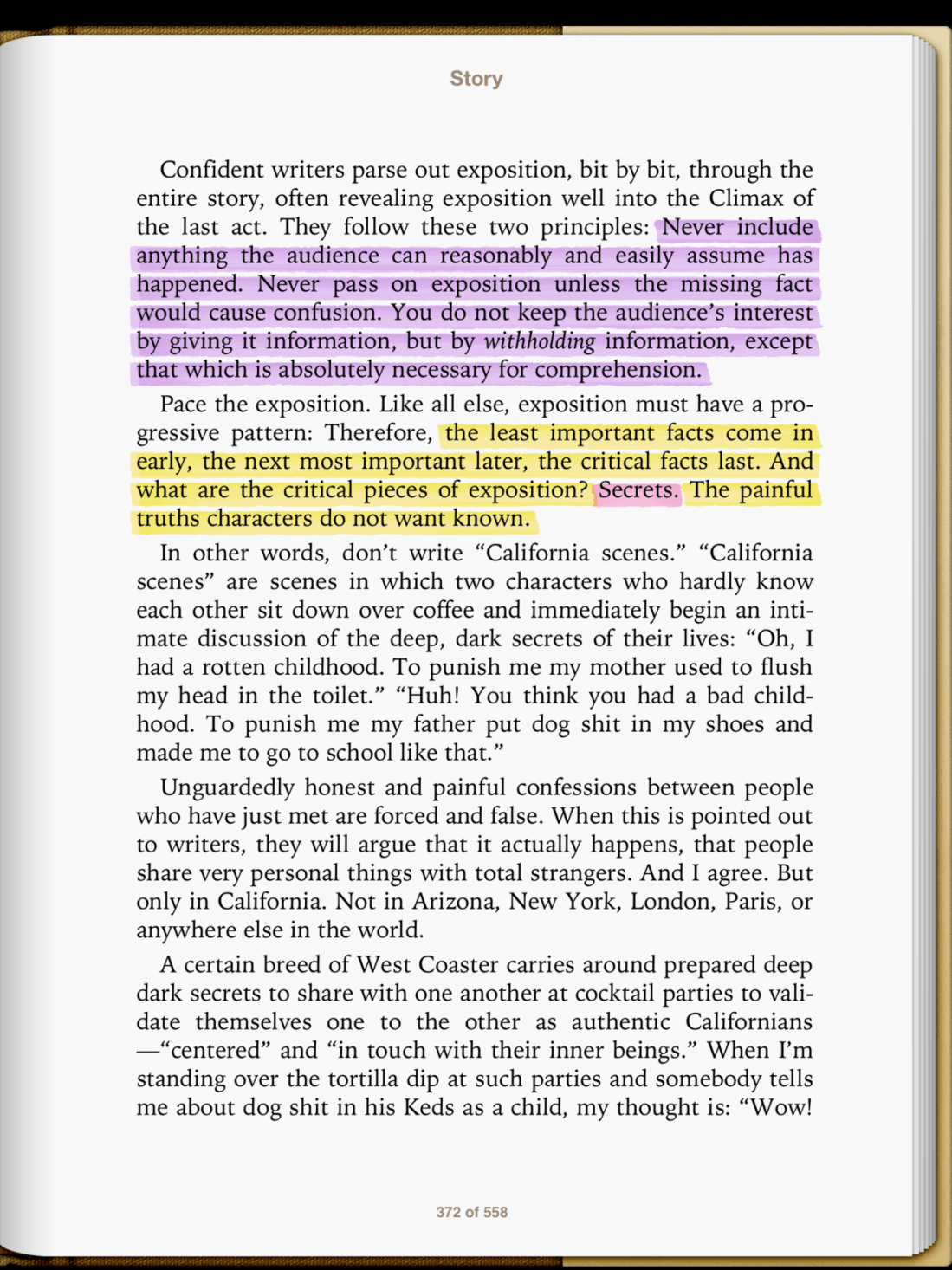
THIS IS ONE OF THE MOST IMPORTANT AND VALUABLE LESSONS YOU CAN LEARN AS A WRITER. I SAY THIS AS A READER AND A PROFESSIONAL GENRE EDITOR.
This is really a thing I’m struggling to learn! I’m like a drunk at a party: if it’s on my mind, I have to tell it to you.
I would pedantically add, though, that you can totally write characters who confess deep dark secrets to near-strangers. However, people who do this, in my experience (I have, in fact, spent a lot of time in California) are covering up their actual deep dark secrets with a smoke-screen of apparent secrets. So Californians aren’t really the exception they appear to be.
(Also: in fanfic, sometimes we do shit we know breaks the “good story rules” because it’s fanfic and we want to. Just saying.)
Writers don’t write from experience, although many are hesitant to admit that they don’t…If you wrote from experience, you’d get maybe one book, maybe three poems. Writers write from empathy.
“What has been my prettiest contribution to the culture?” asked Kurt Vonnegut in his autobiographyPalm Sunday. His answer? His master’s thesis in anthropology for the University of Chicago, “which was rejected because it was so simple and looked like too much fun.” The elegant simplicity and playfulness of Vonnegut’s idea is exactly its enduring appeal. The idea is so simple, in fact, that Vonnegut sums the whole thing up in one elegant sentence: “The fundamental idea is that stories have shapes which can be drawn on graph paper, and that the shape of a given society’s stories is at least as interesting as the shape of its pots or spearheads.”
The laughing of the audience has this particular discomfited edge to it. Like Vonnegut was telling tales out of school and they had to keep reminding themselves his observations were jokes.
“Ha ha! Stories on a graph, so amusing!”
And Vonnegut’s like, “Yeah, humans are absurd, but don’t worry, eventually you’ll realize it’s kind of cool to see what we design stories to do.”
Just like pots, just like spearheads, stories are purpose built works of creation humans make for each other.
The thing I find really interesting is that while we didn’t have the pretty pretty graphs (we had graphs, they just weren’t pretty) this … showed up as a thing being taught alllll through my undergrad.
Created by myself, compiled from questions gleaned from several sources, and some of my own additions.
It should be noted, that not every character will check every one of these things off. It is not REQUIRED to have all this information, but this checklist is, rather, a guideline for helping you think of your character as an entire, three dimentional being with thoughts, feelings, possessions, contradictions and background.
A character is 20% revealed to the reader, 80% writer/author/Mun knowledge. What the Reader sees is just the tip of the iceburg, but without the other 80% the character can’t help but come off feeling shallow. There’s nothing beneath the surface – KNOWING as much bout your character as possible, instrinsicly, in detail, intimately, can do nothing but help build believability and dimension to your character.
Use only the things on this list that you feel are important, but I would like to remind you that the reader learns a lot about a character NOT through exposition (that’s kind of a cheat, and always feels , to me, like a rather clunky way of conveying knowlege), but through their actions, quirks, thoughts, and even through the things they own and carry with them. What kind of food they eat and how they eat it. What they wear. What they carry in their wallets. I encourage you, as writers, to consider these things when creating a character, and encourage you MORE to leave the exposition out and tell us about your character through these other means!
If nothing else, this will give you a LOT to work with when writing with your character. Maybe it’ll spur you to write about the character’s parents. Or the relationship between them and their family. Maybe you’ll find yourself inspired to write something about how they lost everything in a fire – and the importance each remembered lost item held.
There is certainly no rule that says you HAVE to do it this way, but invariably, the most memorable characters are the ones that we as readers can relate with. It’s hard to relate with just words – but people – with beliefs and dreams and fears – that’s something we can get behind.
I certainly hope you find this useful, and since so many have been inclined to reblog and like this, I shall endeavor to add more character creation and writing tips, lists and excercises up on this blog!
I think this is the most beautiful thing I have ever seen.
When creating a character, there’s a lot of questions you ask yourself. Whether it’s an original character or one you’ve been playing for a long time, using a character sheet to get to know your character better can always be a nice idea. With it’s help, you’ll be able to think about things you didn’t necesarily thought about, and ask some important questions to yourself that might activate your character’s voice, or help you to get your muse back with them. Everyone has their favorite character sheets, some people prefer to have a lot of questions, some others like it a bit more vague, so here’s a masterlist of the character sheets I found on various websites and found quite interesting, plus some other things that could be used to help you see, for example, how other character view yours.
With these sheets, you could also try to find your character’s Jung and Enneagram Type or use the Moral Alignment tool. All of these things can be really useful to get a better grip on a character.
Then, if you’re trying to create a character, and do not have many ideas, or get stuck, I’d suggest for you to roam around TVTropes, which gives you a lot of tropes used for character creation. Maybe you could try to mix a few of these and create an original character?
Or, if you’re a skillful writer and know how to make your character different from another, make a list of characters in fiction you happen to find interesting and why. Try to keep it short. Then, maybe, try to mix and match things from two or three characters, take a character and change their backstory, to see what would change. Play with them to inspire yourself and create something new, original and truly yours.
Oh, and here’s a little guide to Mary-Sues and OCs, just in case you want to make sure your character isn’t going to become a Mary-Sue or a Gary-Stu
And last but not least, this article about building fictional character definitely seemed interesting to me, and is full of many other links that could guide you during the creating of your character and help you file one of these sheets.







 Tumblr Exodus